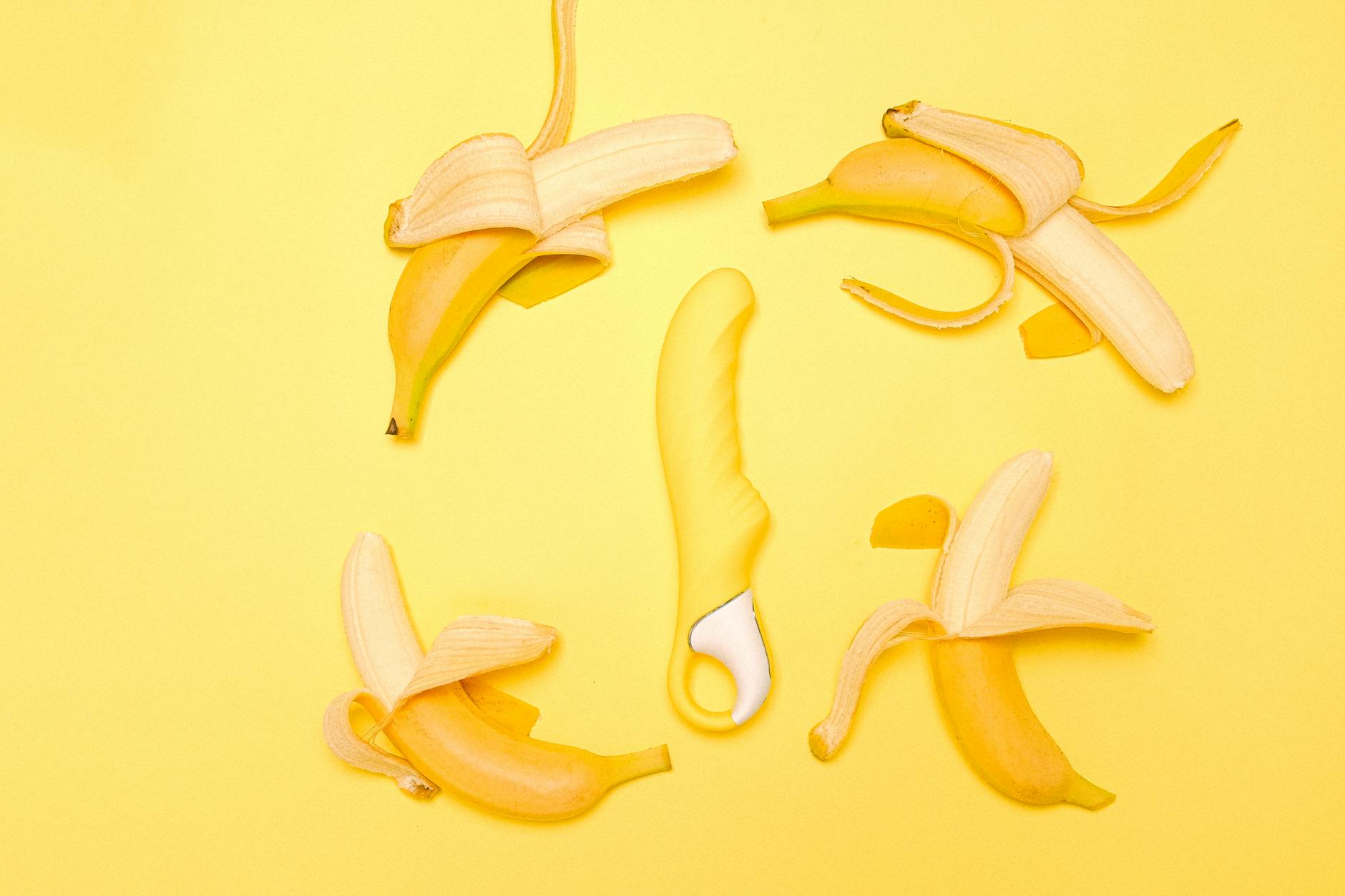
Here's the thing about arousal and sensation
You start with your lemon vibrator on pattern three. It feels incredible. Five minutes later, that exact same pattern feels either weirdly distant or almost painful. You haven't changed the device. Your body has. And that's completely normal, but almost nobody explains why it happens.
I'm going to walk you through the physiology here because understanding what's happening takes the confusion out of the equation. Your pleasure isn't broken. Your nervous system is just doing its job.
What happens to your clitoris during arousal
When you're aroused, blood floods into your genitals. The clitoris fills with blood and grows in size, sometimes doubling in volume in the first few minutes of stimulation. This isn't just a sensation thing. It changes the actual tissue beneath the surface.
As tissues swell, the nerve endings shift slightly in position and become more superficial. That pattern that felt perfect when your tissues were calm suddenly has a different relationship to those nerves. It might feel sharper. It might feel less effective. Both are real changes.
The clitoral glans, the most sensitive part, also becomes temporarily hypersensitive during arousal. This is useful for getting to orgasm, but it also means that moderate intensity can suddenly feel intense, and intense can feel unbearable.
Your pudendal nerve is firing constantly during arousal, flooding your brain with sensation signals. Your brain's processing capacity for each individual stimulus pattern changes. You're not becoming numb. You're becoming more responsive to some patterns and less able to tolerate others.
Why some patterns disappear from sensation mid-session
This is the most common complaint I hear about lemon vibrators and other clitoral suckers. Pattern two felt lovely, then suddenly it vanishes from your awareness even though the device is still vibrating.
That's adaptation. Your nervous system is extraordinarily efficient at filtering background noise. If a stimulus stays constant, your brain stops reporting it. This is why you stop noticing your clothes touching your skin seconds after you get dressed.
During arousal, your sensory threshold shifts downward. Patterns that stayed noticeable at a low-arousal state get filtered out as background once you're deeper into arousal. Your clitoris is receiving the exact same vibration, but your brain has decided that this particular sensation is no longer a priority message.
The solution isn't to turn up intensity. It's to change patterns. A different pattern is a new stimulus. Your nervous system wakes back up. Many people with lemon vibrators find that alternating between two or three patterns every minute or so creates a sensation wave instead of a plateau.
Why intensity suddenly feels like too much
The opposite problem is equally common. You start on pattern five, it's perfect, and by minute four, it feels like the device is attacking you.
This happens because of something called temporal summation. Each vibration cycle adds neurologically to the last one. Your nervous system is accumulating the sensation, stacking it up. You're not hypersensitized to the device itself. You're experiencing the compounding effect of repeated stimulation in the same location.
Tissue congestion also plays a role. As tissues swell with blood, they become more sensitive to pressure. A pattern that felt like a gentle tapping when tissues were relaxed feels more like a poke when everything is engorged and sensitized.
Your pelvic floor muscles also tense during arousal. This is not a conscious choice. It's reflexive. Tense muscles change how vibration is transmitted through your tissues. The same frequency that felt like pure pleasure now feels like it's hitting something tight and resistant.
The fix here is counterintuitive. Don't stop using the device. Drop the intensity. Go from pattern five to pattern two or three. Let your nervous system reset. Often you'll find that the lower intensity actually carries you further toward orgasm because you're not fighting against overstimulation.
Blood flow changes everything
All of these shifts come down to one fundamental change. Arousal is a cardiovascular event. Blood has to get somewhere, and when it's concentrated in your genitals, everything works differently.
Your clitoris becomes more vascular. The tissues become heavier, more sensitive, more prone to pressure changes. The erectile tissue under the clitoral hood swells. This physical change means that the angle at which your lemon vibrator contacts your clitoris shifts by millimeters. Those millimeters matter.
Different parts of the clitoris have different nerve densities. The glans is wildly sensitive. The body of the clitoris below the surface is less so. As arousal deepens, blood flow changes which part is closest to the surface, which changes which nerves are most activated by your vibrator's pattern.
This is why a pattern that worked brilliantly last week might feel completely different this week. Your cycle, your stress level, your hydration, whether you've been sitting down for six hours, whether you're taking a medication that affects blood flow. All of these shift your baseline arousal and your tissue response.
How your brain processes pattern changes
Your brain is actively filtering sensation during sex. Not filtering out. Filtering. Prioritizing some inputs over others. This is necessary, otherwise you'd be equally aware of the seam in your underwear and your lemon vibrator, and you couldn't focus on pleasure.
During early arousal, more parts of your sensory cortex are online. You're aware of multiple sensations. Your partner, the texture of the sheets, the temperature of the room, the vibration pattern.
As arousal deepens, your brain narrows its focus. This is called the "funneling" of attention. More and more neural resources go toward processing clitoral sensation. Everything else goes dim. This is partly why a pattern that felt great when you were moderately aroused feels different when you're highly aroused. Your brain literally changed which sensory information it's routing to your conscious awareness.
The pleasure paradox
Here's what feels counterintuitive. The pattern that feels least pleasant mid-arousal is often the one that will push you over the edge if you stick with it long enough. Your nervous system isn't lying when it says "this feels bad right now." But bad and ineffective are not the same thing.
Some patterns match the frequency of your orgasmic response better than others. Your body knows which ones. But when you're already highly aroused and hypersensitive, that match can feel overwhelming before it feels transcendent.
This is why I recommend experimenting with patterns in three phases. Early arousal, when everything feels good. Mid-arousal, when you start to feel the intensity shift. And the approach to orgasm, when you've learned your own pattern preferences.
Keep a loose mental note of what felt best at each stage. Lemon vibrators and other clitoral vibrators respond to this kind of intentional exploration. You're not trying to find the "right" pattern. You're mapping your own neurology.
When to change approach
If your lemon sucker pattern becomes uncomfortable, you have three immediate options. Lower the intensity. Switch to a different pattern. Or pause for thirty seconds, let your arousal settle slightly, then resume.
All three reset your sensory adaptation and tissue response. None of them is failure. They're navigation. Your pleasure is a conversation between your body and your device, and sometimes that conversation needs a pause.
Many people feel like they should be able to sustain continuous stimulation toward orgasm. That's not how most bodies work. We're built with pauses, rhythm changes, variations. Your lemon vibrator is capable of delivering that if you're willing to experiment with it.
The most intense orgasms I see in my practice often come from people who learned to read these mid-session shifts and work with them instead of against them. Variation isn't a compromise. It's sophistication.
The long game
If you notice that pattern adaptation is happening consistently, there's useful information there. It might mean your nervous system is very responsive to repetition, and you benefit from more variation. It might mean you're moving through arousal phases quickly, which is its own advantage. It might mean your tissue sensitivity is heightened right now, which could point to hormonal shifts or dehydration.
None of these are problems. They're data. The more you understand your own response patterns, the more intentionally you can use your lemon clitoral vibrator. You're not trying to force a consistent experience. You're learning to dance with the changes your body naturally creates.
This is also a perfect reason to revisit our guide on lemon vibrator recovery time between sessions, because understanding your adaptation patterns helps you space sessions in a way that maximizes sensation. And if you're using your device with a partner, how to use a lemon vibrator with your partner becomes a conversation about reading these shifts together.
Your body isn't malfunctioning when a pattern feels different mid-session. It's doing exactly what it's designed to do. The skill is learning to work with those changes, not against them.
People also ask
Why does my lemon vibrator pattern feel numb after a few minutes of use?
Your nervous system is experiencing sensory adaptation. When a stimulus stays constant, your brain stops actively reporting it to your conscious awareness. This is a protective mechanism. During arousal, it happens faster because your sensory processing is heightened. Switch to a different pattern, drop the intensity slightly, or pause for 30 seconds. Varying the input resets adaptation and brings sensation back online.
Can changing lemon vibrator patterns too often prevent orgasm?
No, actually the opposite is often true. Varying patterns keeps your nervous system engaged and prevents the plateau that constant stimulation creates. Some people find that alternating between two patterns every 60-90 seconds creates more intense sensation and faster orgasm than staying on one pattern. The key is finding the rhythm that works for your body.
Does arousal affect how all vibrators feel or just clitoral ones like lemon vibrators?
Arousal affects sensation everywhere, but the effect is most dramatic with highly localized, intense stimulation like clitoral vibrators. Internal vibrators and broader-contact toys tend to show less adaptation because they're distributing sensation across a larger area. Clitoral vibrators and clitoral suckers concentrate everything on a small, highly sensitive region, so changes in tissue response and nerve sensitivity are much more noticeable.
Why does my lemon clitoral vibrator feel better on some days than others?
Your baseline arousal level, hormonal cycle, stress, hydration, and blood flow all shift daily. These affect tissue sensitivity and blood engorgement. Medications, caffeine intake, and even how much sleep you got can influence clitoral tissue response. This isn't about the device. It's about your body's state on any given day. If a pattern felt great last week, it will again when your body is in a similar state.
Is it normal for a lemon vibrator pattern to hurt during arousal?
Sensation that feels sharp or uncomfortable usually points to overstimulation of hypersensitive tissue. Drop the intensity by 1-2 levels, switch to a gentler pattern, or pause briefly. Discomfort isn't a reason to stop using the device. It's information that your arousal level and tissue sensitivity have shifted and need adjustment. If pain persists even at low intensity, check for irritation or abrasion.
How do I know which lemon vibrator pattern will get me to orgasm if they all feel different during arousal?
Experiment across arousal phases. Note which patterns feel best early on, which feel better at mid-arousal, and which carry you toward orgasm. Most people find that their most effective pattern is actually different from their favorite-feeling pattern. The one that brings the most pleasure isn't always the one that triggers orgasm. Both are valuable data. Over time, you'll develop a sense of which progression works best for your body.
Why this matters
Understanding why your lemon vibrator's pattern intensity feels different mid-session takes the mystery out of the experience. You're not losing sensation. You're experiencing the normal, predictable shift that happens when your body moves through arousal. The skill is learning to read those shifts and adjust your approach.
Your nervous system knows what it's doing. Your job is to get curious about what it's telling you and respond with variation, intentionality, and patience. That's when lemon clitoral vibrators become genuinely powerful tools for pleasure.