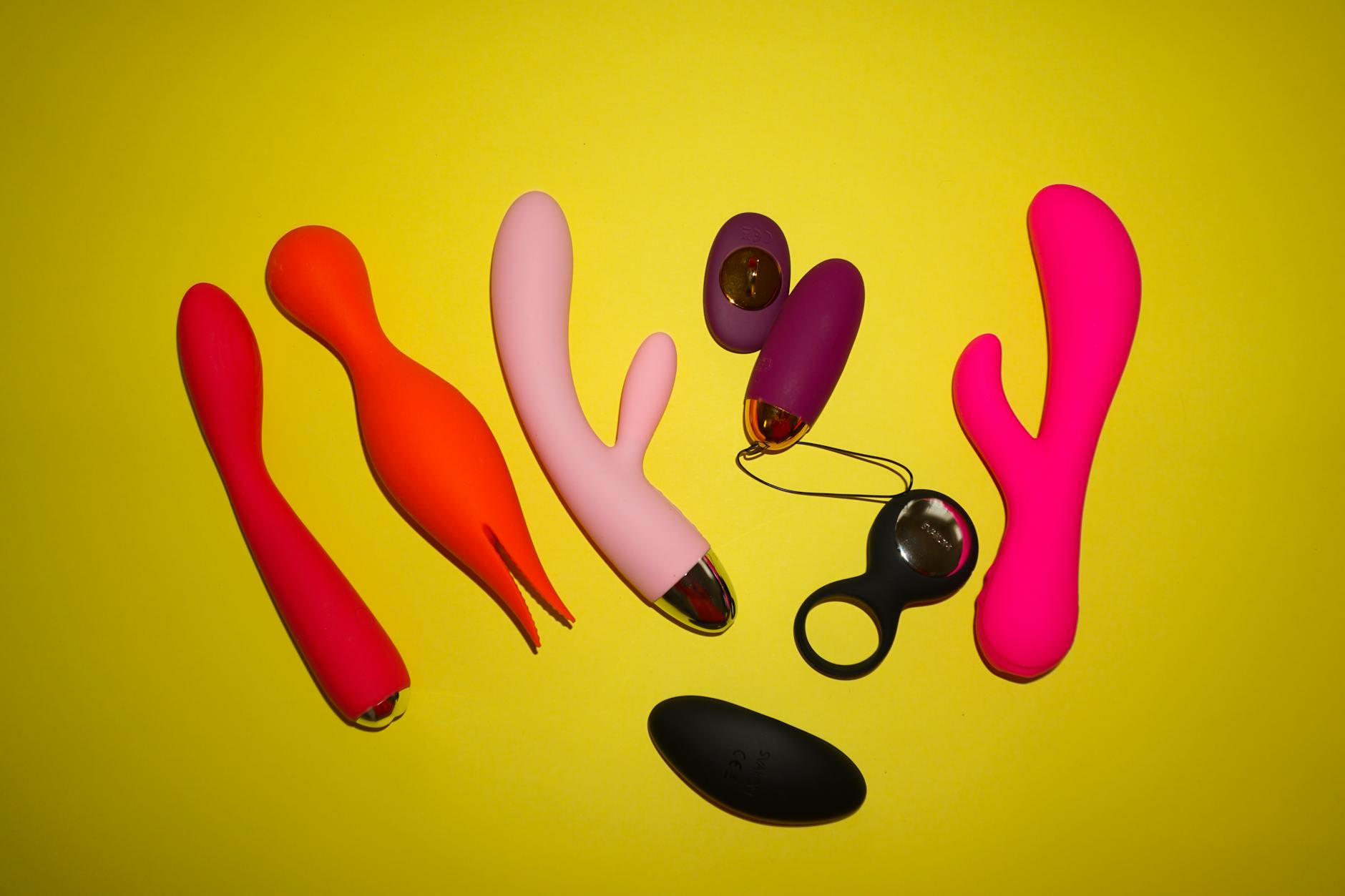
Let's be real: pleasure gets paused when life implodes
Breakup, job loss, death in the family, relocation, major illness. These moments don't just affect your mood for a week. They reorganize your entire nervous system. Your brain gets stuck in threat-detection mode. Your body forgets what relaxation even feels like. And suddenly the idea of reaching for your lemon vibrator feels impossible, frivolous, or just plain disconnected from what you're actually capable of right now.
Here's what I tell clients: that disconnection is real and temporary. Your capacity for pleasure didn't vanish. Your nervous system just got hijacked.
Why major stress actually changes how your body responds
When you're grieving or in crisis, your body floods with cortisol and adrenaline. These hormones suppress dopamine and serotonin. Arousal requires both of those neurotransmitters to activate. It also requires your parasympathetic nervous system (the rest-and-digest one) to be online. When you're in crisis mode, you're locked in sympathetic activation (fight-flight-freeze). Your clitoris literally has less blood flow. Your brain is too busy scanning for danger to process pleasure signals.
This is not a character flaw. It's neurobiology.
The second thing people don't realize: trying to force pleasure during crisis often backfires. You sit down with your lemon vibrator, nothing happens, and you feel broken on top of whatever else you're carrying. So you stop trying. The longer you stay away from your body, the more foreign it becomes.
The reconnection protocol: how to ease back in
I recommend a staged approach instead of jumping straight back to your usual rhythm.
Week one: just touch, no vibration. Spend five minutes a few times a week just holding your lemon vibrator. Feel its weight. Notice the silicone. Run it over your forearm or inner wrist where sensation is heightened but stakes are low. You're telling your nervous system: this is safe. No performance. No pressure to respond.
Week two: exploration without expectation. This time, you can turn it on. But start with the lowest setting and focus on sensation rather than outcome. Touch your inner thigh, your breasts, your neck, your ears. Anywhere except the direct clitoral zone. The point is to map your nervous system's capacity for pleasure again. Some days you'll feel it. Some days you won't. Both are fine.
Week three: slow clitoral reintroduction. Once you've spent a week remapping your body's pleasure signals, start with your lemon vibrator on the lowest setting against your clitoris. Keep the session short. Ten to fifteen minutes. If nothing builds, that's okay. You're just re-establishing the pathway. Repetition matters more than intensity.
The mental piece matters as much as the physical one
Here's what I notice with clients rebuilding pleasure after loss: the body often wants to come back faster than the mind allows it.
You're sitting there with your lemon vibrator and a voice in your head says something like: "How can you be thinking about this when your job situation is still a disaster?" or "Your ex is starting a new relationship and you're here doing this?" That's your internalized guilt and shame talking, not your actual desires.
You get to have pleasure and grief simultaneously. You get to build back your intimate self-care while also managing crisis. These aren't contradictory. In fact, reconnecting with your body's capacity for joy is part of healing from major disruption.
One thing that helps: separate the conversation between your body and your circumstances. Your body's pleasure is not a referendum on how serious your crisis is. It's a signal that you're stabilizing. When you can feel desire again, even for five minutes, it means your nervous system is starting to come online.
The role of lube, pacing, and patience
After emotional upheaval, your natural lubrication often takes longer to show up. This is partly physiological (stress suppresses it) and partly psychological (your mind hasn't caught up to the idea that pleasure is available). Don't interpret this as failure.
Always use a water-based lubricant during this phase. Not because something's wrong with you, but because it removes friction that your already-tender system doesn't need. Friction is work. Your nervous system is tired. Lubrication turns it into ease.
Also pace differently than you would in your baseline. If you normally use pattern settings three through five, stay in one and two for a few weeks. Your sensitivity is heightened right now because your nervous system hasn't had the chance to regulate back down. Less intense can feel more pleasurable because it doesn't overwhelm.
When to know you're ready to integrate your partner again
If you're rebuilding pleasure after a breakup or relationship conflict, the question of when to involve your partner comes up. The answer is: not until you've rebuilt it alone first.
I'm serious about this. You need to know that your body still works. That pleasure is still available to you independent of another person. Once you've felt that, the conversation with your partner becomes different. It's not "I'm broken, help fix me." It's "I'm reconnecting with myself and I'd like you to be part of that."
Start small. Maybe your partner holds you while you use your lemon vibrator. Maybe they focus on your neck and shoulders while you manage clitoral stimulation. The goal is presence, not performance. How to use a lemon vibrator with your partner is its own conversation, but the foundation is always solo reconnection first.
The milestone moments to watch for
You'll know you're genuinely rebuilding when a few things start happening:
Your body warms up faster. Instead of needing twenty minutes to find any arousal, you're noticing response within five to ten. That's parasympathetic activation coming back online.
You're fantasizing again. Your mind is starting to generate its own pleasure signals, not just responding to external stimulation. This is huge. Fantasy is one of the last things to return during crisis recovery.
You stop timing it. You're no longer thinking "I should use my vibrator three times a week as part of my wellness routine." You're actually reaching for it because you want to. Desire is back. The performance has stopped.
When to check in with a professional
If it's been three months of consistent reconnection effort and you're still feeling completely numb, that's worth bringing up with a therapist or your GP. Sometimes grief or trauma gets lodged in the body in ways that need professional support to shift. That's not a reflection on you. It's a reflection that your system needs more support than self-care alone can provide.
Same thing if why lemon vibrator orgasms feel weaker after emotional stress is your experience and nothing is shifting. There might be a physiological component worth exploring with a healthcare provider.
The reality nobody talks about
Your capacity for pleasure after major life change often comes back different than it was before. Sometimes it's muted for a while. Sometimes it's actually more intense because you're more present with your body out of necessity. Sometimes you discover that what worked before doesn't anymore, and that's actually fine. It means you're evolving.
Let that happen without judgment. Your lemon vibrator isn't a test of your recovery. It's just a tool for reconnecting with yourself at whatever pace your actual nervous system allows.
Frequently Asked Questions
How long does it typically take to reconnect with pleasure after a major breakup?
There's huge variation here, but I usually see clients regaining baseline pleasure capacity in four to eight weeks if they're actively reconnecting. That said, the depth and ease often take longer. You might be orgasming again in two months but not feeling genuinely relaxed and present during it for another two. Both timelines are normal. The key is consistency without pressure.
Can using a lemon vibrator too early in grief actually make things worse?
Not inherently, but forcing it when you're completely numb can feel discouraging. If you try and nothing happens, and then you interpret that as proof that you're broken, that creates a secondary layer of distress. That's why the staged approach matters. You're building evidence that your body still works before you're asking it to produce the full experience.
Is it normal to feel guilty about experiencing pleasure while dealing with crisis?
Completely normal and also worth examining. Our culture does a weird thing where we treat pleasure like a privilege you have to earn through suffering. You don't. Your body deserves care, comfort, and joy regardless of what's happening in your external life. That guilt you're feeling is often internalized messages about what you're supposed to be doing right now. Question it.
What if my partner wants to help me reconnect but I'm not ready?
Tell them that. Directly. "I need to rebuild this alone first, and then I'd like us to explore it together." If your partner is someone worth being with, they'll understand. If they pressure you, that's information about the relationship itself. Your timeline matters more than anyone's comfort with your healing.
Can stress-related numbness during pleasure actually cause permanent desensitization?
No. Your nervous system is capable of remarkable recovery. What feels numb right now is temporarily suppressed, not permanently broken. Once your system starts moving out of crisis mode, sensation comes back. The how lemon vibrators affect clitoral sensitivity over time question is different from stress-related suppression. One is about adaptation. The other is about activation. You're dealing with activation right now.
Should I use my lemon vibrator as a coping mechanism during really hard moments?
Sparingly. A quick reconnection moment during a hard day is fine. But using it to numb out or escape is different from using it to heal. There's a line between "this feels good and grounding" and "I'm using this to not feel the actual thing I need to process." Stay aware of which one you're doing. Your vibrator is a tool for pleasure and reconnection, not dissociation.
Reconnecting with your body after major life upheaval isn't about forcing yourself back to baseline. It's about meeting yourself where you actually are and slowly, gently, bringing your nervous system back online. Your lemon vibrator will be there when you're ready. And you will be ready.