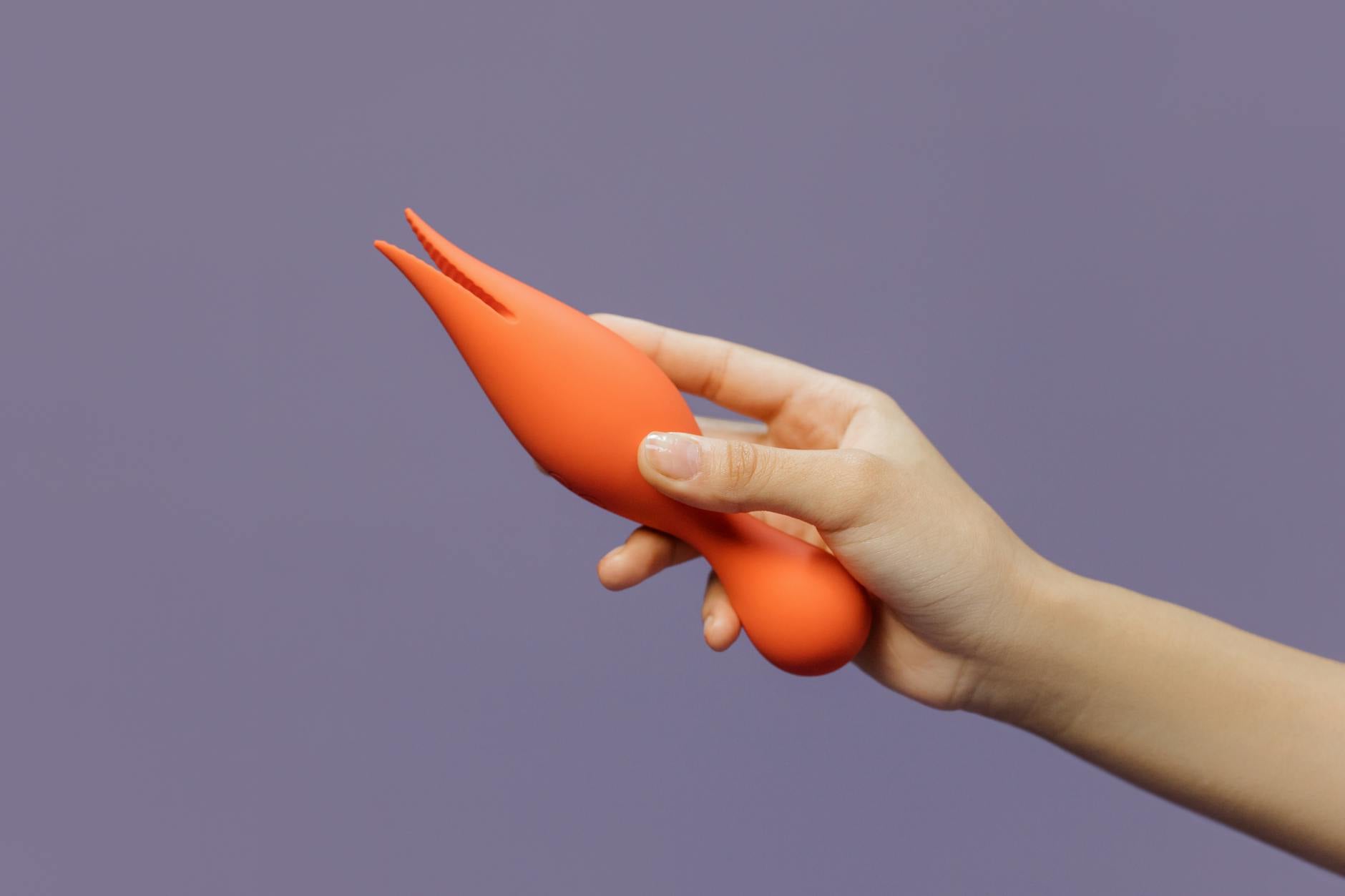
Let's name what's actually happening
Perimenopause is not menopause. This matters because the two feel wildly different in your body, especially when it comes to pleasure. Menopause is a fixed point. Perimenopause is a decade-long seesaw. Your estrogen and progesterone are doing a chaotic dance, and that dance affects everything from vaginal lubrication to clitoral sensitivity to how quickly your body warms up.
You're not broken. Your lemon vibrator isn't broken either. What's changed is the conversation between your hormones and your pleasure response. Understanding that shift is half the battle.
The perimenopause pleasure paradox
Here's the confusing part. Some weeks, you'll feel like a teenager again. Arousal shows up without warning. A touch that didn't register last month suddenly feels electric. Other weeks, you could be touched for an hour and feel nothing. Your clitoris is there. Your lemon clitoral vibrator is there. But the neural dial has turned down.
This isn't random. Perimenopause cycles through phases. In the follicular phase (early cycle), when estrogen is higher, clitoral tissues are plumper and more responsive. Your lemon vibrator feels more intense, arousal builds faster, and sensitivity is high. In the luteal phase (later cycle), when progesterone dominates, tissues thin slightly, lubrication can drop, and the same pattern on your lemon vibrator that worked last week might feel muted.
Add in hot flashes, night sweats, mood shifts, and the general chaos of unpredictable bleeding, and you're not just adjusting to a toy. You're learning your body for the second or third time.
What actually changes with a lemon vibrator during perimenopause
Suction feels different. The beauty of air-suction devices like the Lem is that they don't rely on friction. They work with your body's pressure response rather than against it. During perimenopause, that becomes crucial. Direct vibration can feel uncomfortably intense on thinning tissue. Suction? Suction adjusts beautifully. Start at pattern 1 or 2 and you've got a gentler entry. Move to 3 or 4 when your body's ready.
Warm-up time expands. Before perimenopause, maybe you needed five minutes to feel ready. Now budget fifteen. Arousal doesn't disappear, but the ramp gets longer. That's not a flaw in your system. It's literally hormonal. Lower estrogen means fewer blood vessels rushing to the clitoris at the start of arousal. Your body needs more time to pump blood to sensitive tissues. Use that time. Touch yourself first. Read something that turns you on. Let your mind catch up to your intention.
Lubrication becomes intentional. Water-based lube isn't a sign you're failing. It's a pH-matched support for tissue that's responding to hormonal shifts. Some weeks you won't need it. Some weeks it's essential. Keep it nearby. Silicone-based lubes feel richer and last longer, but they can degrade silicone toys. Stick to water-based for your lemon vibrator.
Orgasm shape shifts. This is the part nobody talks about. Perimenopause doesn't make orgasms disappear. It sometimes changes their architecture. You might notice orgasms take longer to build but feel deeper when they arrive. Or they come faster but feel less intense. Some people report multiple smaller peaks instead of one big wave. None of these is wrong. They're just different. Your nervous system is adjusting to new hormone levels.
Practical adjustments that work
Start lower, stay patient. Don't jump straight to pattern 5 because that's where you lived last year. Perimenopause means your baseline is shifting week to week. Pattern 2 or 3 on your lemon clitoral vibrator might be your sweet spot for two weeks, then Pattern 4 the next month. You're not regressing. You're tracking your actual body, not an imagined version.
Extend your foreplay. If you have a partner, this is a conversation to have together. "My arousal timeline has shifted. I need more warm-up time and I want to stay playful about it." If you're solo, permission to spend twenty or thirty minutes on yourself. That's not indulgent. That's honoring your body's current rhythm. Some of my clients find that the slower pace actually brings more pleasure overall.
Track what works. Keep a simple note. Not a diary, just a line or two. "Pattern 3, good warmup, lube helped" or "Unexpected arousal mid-afternoon without warning." After three or four cycles, patterns emerge. You'll notice that certain days respond better to your lemon vibrator, certain settings land better during specific parts of your cycle. That's your personal data. Use it.
Manage heat and stress. Hot flashes don't just disrupt your day. They can interrupt arousal mid-session. If you're overheated, your nervous system is in stress mode, and pleasure shuts down. Cool sheets, a fan nearby, and checking in with your stress level before you settle in makes a real difference. You can't always control the hot flash, but you can control the environment around it.
When hormonal changes mean a doctor conversation
If perimenopause is genuinely disrupting your sexual function, that's worth mentioning to your gynecologist or your primary care doctor. I say this as someone who sees lots of couples trying to navigate these changes alone. You don't have to.
Some people benefit from bioidentical hormone therapy during perimenopause. Others find that addressing thyroid function or vitamin D levels shifts everything. A few find that low-dose antidepressants (which are sometimes prescribed off-label for mood and physical symptoms in perimenopause) actually improve sexual function. You have options. Your doctor should know what's happening so they can help you sort through what might help.
The relationship piece
If you're partnered, this transition is about both of you. Your partner might feel rejected if arousal takes longer. You might feel pressured to perform on a timeline that doesn't match your body anymore. Those feelings are normal, and they need air time.
The best couples I work with separate the logistics from the emotion. "My body is responding on a different timeline" is a logistics conversation. "I want us to stay connected through this" is an emotion conversation. They're different conversations, and both matter.
If you've been using a lemon vibrator solo and you're thinking about integrating it into partner sex during perimenopause, go slow. You're managing your own shifting pleasure AND your partner's learning curve. Be specific about what feels good. Show them. The Lem can absolutely be part of partnered pleasure during perimenopause, but it works best when everyone knows what they're aiming for.
The plot twist nobody expects
Some people say their best sexual experiences come during perimenopause. Sounds impossible, right? But here's why it happens. You stop performing for an imagined ideal. You get curious about what actually works for your body right now. The pressure to come quickly evaporates because your timeline has already changed. And sometimes, that permission lands you somewhere deeper than you've ever been.
Perimenopause isn't the beginning of decline. It's the beginning of knowing your body with way more honesty. Your lemon vibrator is still there. Your capacity for pleasure is still there. What's changed is the map. Learn it. And then trust it.
People also ask
Can I use my lemon vibrator the same way during perimenopause as I did before? Probably not every session, and that's normal. Your body is changing, so your technique will too. Start with your old favorite pattern, and if it feels too intense, dial back. If it feels too soft, try one pattern higher. You're recalibrating, not starting from zero.
Does perimenopause make clitoral vibrators less effective? No, but they might work differently. Suction-based devices like Hello Nancy's lemon vibrator often feel better during perimenopause because they're gentler on thinning tissue than traditional vibration. If straight vibration starts to feel harsh, air-suction is worth trying.
Should I use more lube when I'm in perimenopause? Yes, usually. Lubrication naturally drops when estrogen dips. That doesn't mean you're aroused wrong. It means your tissue needs support. Water-based lube is your friend. Some weeks you'll barely need it. Some weeks you will. Both are fine.
Can perimenopause symptoms affect orgasm with a partner versus solo? Absolutely. When you're solo, you control the pace, the pressure, and the environment. With a partner, you're managing their needs too. During perimenopause, that extra mental load can actually delay arousal. This is why communication matters so much.
What if my lemon vibrator stops feeling good during perimenopause? Take a break for a few days. Your sensitivity might just need to reset. When you come back, try a lower pattern or add lube. If nothing works and you're genuinely concerned, check in with your doctor. Sometimes perimenopause shifts are normal cycling. Sometimes they signal something else worth investigating.
Is it normal to lose interest in pleasure during perimenopause? Interest can dip, but capacity doesn't disappear. That dip is often tied to mood, stress, or hormone timing rather than a permanent shift. Sometimes interest comes back once you adjust your approach. Sometimes you need support from a therapist or doctor. Both are valid paths.
Your pleasure matters during perimenopause. Not after. During. Your lemon vibrator is still a good tool. You're just learning a new language for using it.