Let's talk about the thing no one mentions at the pharmacy
You started an antidepressant. Your mood improved. Your anxiety loosened. And then you noticed something shifted with pleasure. Maybe orgasms feel flatter. Maybe arousal takes longer to build. Maybe sensation feels muted, like you're experiencing everything through a thin layer of glass.
This is real. It's not in your head (ironic, given that's where the medication is working). And you're not broken.
Here's what's actually happening, why it happens, and what helps.
How SSRIs and SNRIs affect pleasure
Most antidepressants work by increasing serotonin availability in your brain. That's excellent for mood regulation. But serotonin also plays a role in sexual response, particularly in the parts of the brain that signal arousal and orgasm.
The mechanism: SSRIs (selective serotonin reuptake inhibitors like sertraline, paroxetine, fluoxetine) and SNRIs (serotonin-norepinephrine reuptake inhibitors like venlafaxine) increase serotonin by preventing its reabsorption. This is therapeutic for depression and anxiety. But elevated serotonin can blunt dopamine signaling, and dopamine drives desire, arousal, and the intensity of physical sensation.
Think of it this way: your brain's pleasure chemicals are in a new ratio. The antidepressant is doing its job. Your pleasure system is just adjusting to the new neurochemistry.
Orgasm difficulty is the most common sexual side effect, reported by 40-60 percent of people on SSRIs depending on the medication and dose. Reduced libido comes second. Delayed arousal third. The Lem clitoral vibrator, because it uses air-pulse suction rather than traditional vibration, can sometimes bypass some of this dulling effect, but it's not a guarantee.
The timeline matters more than you'd think
Here's the hopeful part: this often improves with time. Sexual side effects from SSRIs tend to plateau at 4-8 weeks, and many people report gradual improvement over 2-3 months as the body adjusts. Your pleasure system isn't permanently altered. It's recalibrating.
But "eventually maybe it gets better" is not a useful strategy when you're noticing the difference now.
What actually helps
Three evidence-backed approaches work:
1. Talk to your prescriber about timing or dose. This is not the same as stopping the medication. Some people find that taking their SSRI at night rather than morning shifts when the peak level hits. Others find that a modest dose reduction (if your doctor agrees) makes a difference. Some switch to a different SSRI altogether. Bupropion (Wellbutrin), which works on dopamine rather than serotonin, has the lowest sexual side effect profile of any antidepressant. This is worth asking about, though it's not suitable for everyone.
2. Extend warm-up time dramatically. With a muted dopamine signal, arousal takes longer. Budget 20-30 minutes instead of 5-10. Use a lemon clitoral vibrator like the Lem on lower intensity patterns first, building gradually. The suction mechanism is gentler than traditional vibration and can actually help when arousal is slow to build.
3. Use lubrication generously. Antidepressants can also reduce natural lubrication. Water-based lube isn't just comfort. It reduces friction, which means less stimulus is lost to physical effort and more reaches your nerve endings. This is particularly important with lemon sexual toys because the sensation quality depends on direct contact.
The psychological layer that nobody names
Here's what happens after a few weeks of noticing a change: you start anticipating the problem. You begin a session thinking "this won't work like it used to." That anticipatory anxiety literally makes it harder for your parasympathetic nervous system to activate, which is required for arousal.
So part of what you're dealing with is medication side effect. Part of it is your brain protecting you by bracing for disappointment.
Break the loop by separating what you're doing from what you're expecting. A lemon adult toy isn't a pass-fail test. It's a tool. Some sessions will feel closer to baseline. Others will surprise you. This isn't failure. It's variation.
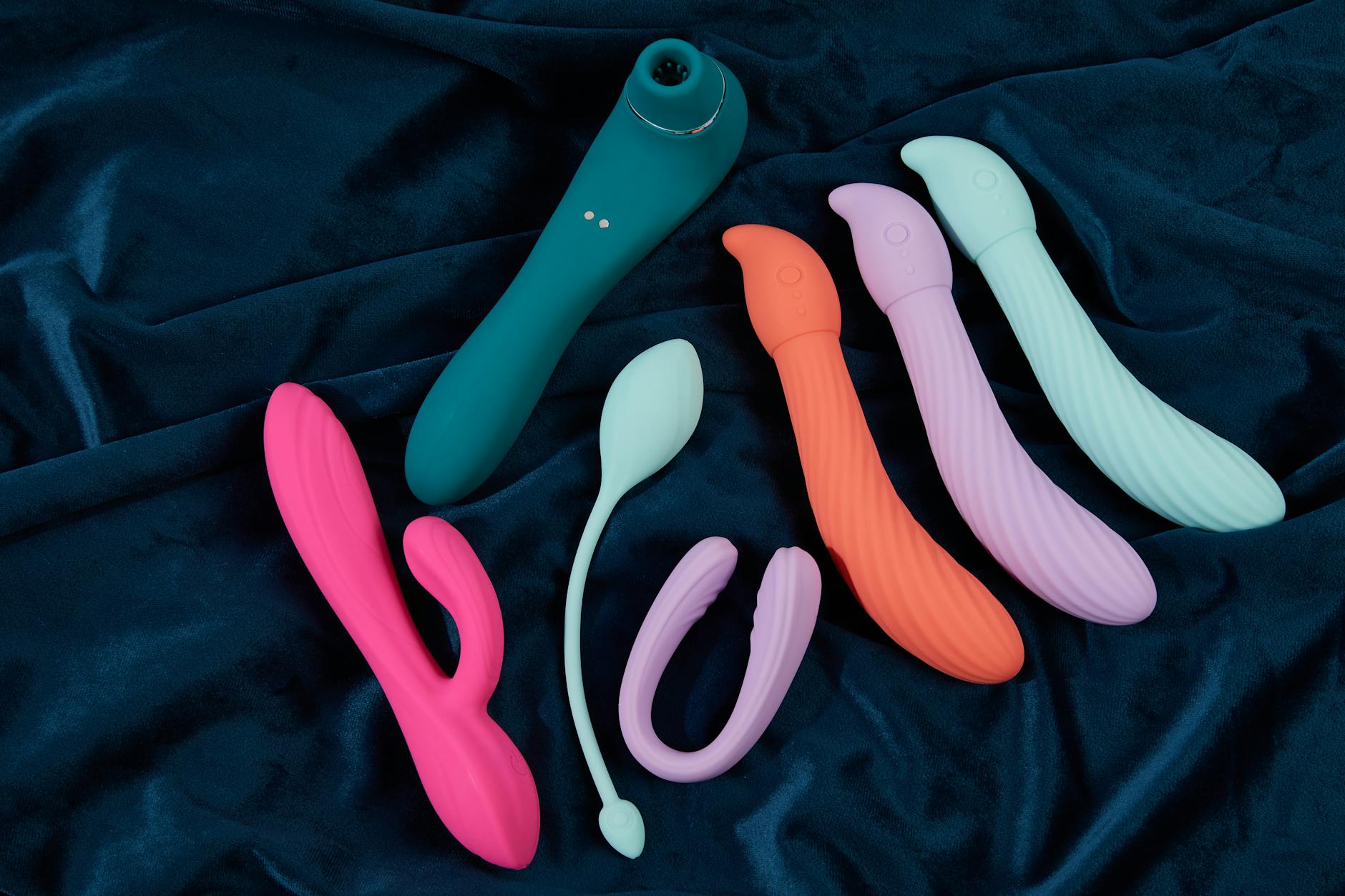
Photo by IFONNX Toys on Pexels
When to escalate the conversation
If sexual side effects are severe and persistent beyond 3 months, this is worth escalating. Your prescriber can:
Add a second medication designed to counteract the sexual side effect. Bupropion or buspirone are sometimes added specifically for this reason. Sildenafil (Viagra) can improve arousal and orgasm capacity even if you're not dealing with erectile dysfunction.
Switch to a medication with a lower sexual side effect profile entirely.
Adjust the timing of your dose so the peak level misses your most important window.
These aren't Band-Aids. They're legitimate adjustments.
The relationship conversation, if you have a partner
If you're partnered, your partner might notice the change too. This is where communication matters. "My medication is affecting arousal" is a statement about your neurochemistry, not your desire for them. Confusing these two things turns it into a relationship problem when it's actually a medication management problem.
If you're both willing to adjust expectations temporarily and explore differently (longer foreplay, different types of touch, a lemon vibrator as part of mutual pleasure rather than as a goal), this transition period can actually deepen intimacy instead of creating distance.
Solo exploration and the Lem advantage
When you're using a lemon clitoral vibrator or other lemon sexual toys solo, you have full control over pacing and intensity. Start lower than you think you need to. Build slowly. Pay attention to sensation rather than outcome. This isn't resignation. It's information gathering.
Many people find that suction-based stimulation from the Lem actually works better during this adjustment period than traditional vibration because it engages a different set of nerve pathways. The suction mechanism feels qualitatively different, and that difference sometimes bypasses the dopamine dulling enough to register as novel sensation.
Recovery is possible, but not linear
Your antidepressant is working. Your mood is better. That's the priority, and it's worth some adjustment period in other areas of your life. But you don't have to accept permanent numbing as the cost of mental health.
Talk to your doctor. Adjust your expectations in the short term. Give your body time. Explore what feels good now, rather than mourning what used to feel good. Most people find that sensation and orgasm capacity normalize within a few months, either through adjustment or through medication tweaking.
Your pleasure matters. So does your mental health. You don't have to choose.
FAQ: Antidepressants and sexual response
How long does it take for sexual side effects to improve?
Most people notice the side effect within 1-2 weeks of starting. The intensity often plateaus around 4-8 weeks. Improvement typically happens gradually over 2-3 months as your body adjusts to the new neurochemistry. Some people experience improvement without any intervention. Others need dosage adjustment or medication change. If you're at the 3-month mark with no improvement, that's when to escalate the conversation with your prescriber.
Can I use a lemon vibrator to "train" my sensitivity back?
Not exactly, but exploring sensation without outcome pressure helps. Regular use of a lemon clitoral vibrator in a low-stakes way (not as a test, but as exploration) can help you map what feels good in your current neurochemical state. This information is useful both for you and for your prescriber when deciding whether to adjust medication. It's not about retraining. It's about gathering data.
Should I stop my antidepressant if sexual side effects are bad?
No. Stopping abruptly creates serious withdrawal symptoms and typically leads to rapid return of depression or anxiety. Talk to your prescriber instead. There are multiple options: dose adjustment, timing change, switching medications, or adding something to counteract the side effect. You deserve mental health support and sexual pleasure. The answer is modification, not cessation.
Do all antidepressants cause sexual side effects?
No. SSRIs and SNRIs cause them most frequently. Bupropion (Wellbutrin) has the lowest rate. Tricyclic antidepressants like nortriptyline vary. Mirtazapine can actually increase libido for some people. If sexual function matters significantly to you, this is worth mentioning to your prescriber when choosing medication. It doesn't override medical necessity, but it's relevant information.
Does lubrication really help if the problem is neurochemical?
Yes. The problem has two components: a neurochemical one (reduced dopamine signaling) and a physical one (reduced sensation or lubrication). Lubrication addresses the physical component. Better physical sensation can sometimes partially compensate for the neurochemical dulling. It's not a complete solution, but it's a real one.
If medication changed my orgasms, will they ever feel like they used to?
Maybe, maybe not. Some people find that their orgasms normalize completely after their body adjusts. Others find that even after adjustment, the quality is slightly different. This isn't a failure. Orgasms often change with life circumstances anyway. The goal isn't returning to baseline. It's finding what feels good in your current body and brain. That's usually achievable.
The bottom line
Antidepressants help depression. Sexual side effects are real but often temporary or manageable. Talk to your prescriber. Adjust your expectations short-term. Explore sensation in a low-pressure way. Most people find a workable path through this adjustment period. Your mental health matters. Your pleasure matters too. You don't have to sacrifice one for the other.
If you're navigating relationship changes alongside medication adjustment, consider reaching out to explore how to communicate about shifts in intimacy. Connection often improves when both partners understand what's actually happening.