
Why Your Lemon Vibrator Isn't Making You Come (and What Actually Helps)
Honestly? The vibrator isn't the problem.
I've worked with hundreds of couples, and I can tell you that when someone buys a quality clitoral vibrator like a lemon sucker and still can't orgasm with their partner, the blockage is almost never mechanical. It's relational, psychological, or a mix of both. The vibrator is just the thing we blame because it's easier than looking at what's actually happening in the room.
Let me break down the real obstacles, and how to move through them.
The attention gap
This is the biggest one I see. Your partner is present, but not attuned. Attuned means they're watching your face, your breath, the tilt of your hips. They're not performing a sequence they learned from a video. They're responsive.
When you're using a lemon vibrator or any clitoral vibrator with a partner, you need their full attention in the moment. Not their phone, not their planning about what comes next, not their worry about how long this is taking. You need them genuinely curious about what's working for you right now.
Here's what shifts this: before you use the vibrator together, spend five minutes with no agenda. Your partner touches you with their hands only. No vibrator. No expectation of orgasm. Just sensation. This teaches their nervous system what you like and trains their attention.
The permission problem
Many people with vulvas grew up with the message, spoken or silent, that their own pleasure was indulgent or secondary. So even when alone with a vibrator they have no trouble, suddenly with a partner present, something tightens. You're performing good sex instead of having it.
Permission sounds simple until you realize you're wrestling with decades of conditioning. Your partner can help by saying this out loud: "I want you to come. I want to see you feel good. Take as long as you need." Not as a script but as an actual belief they hold. If they're rushing, you'll feel it in your body before you hear it in their words.
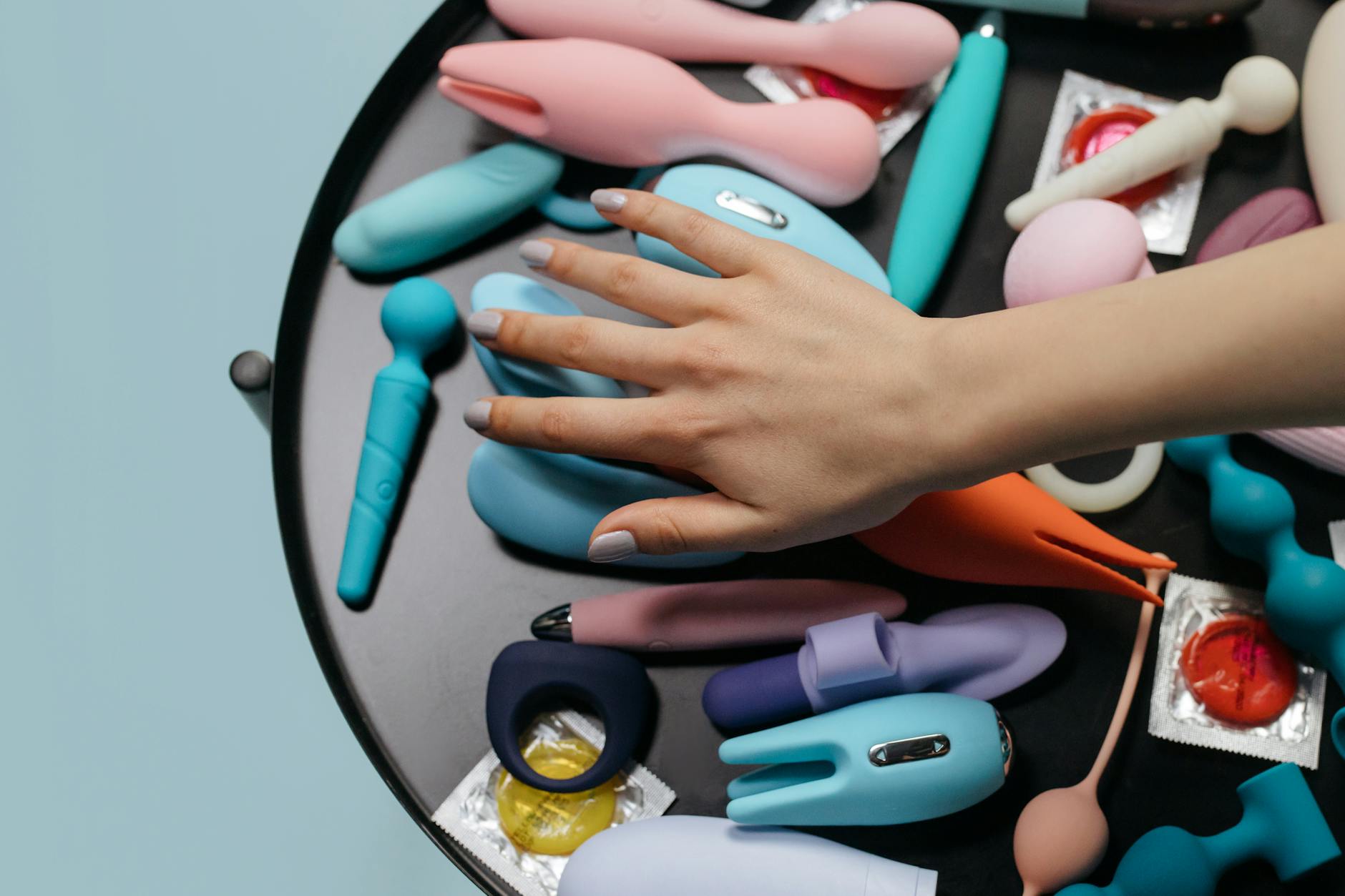
Photo by cottonbro studio on Pexels
The isolation trap
Some couples use a vibrator as a solo tool during partnered sex. That works for some people. But for others, it creates a mental distance at the exact moment you need connection. The vibrator becomes a barrier between you instead of a bridge.
The fix is integration. Your partner should be involved. They hold it sometimes. They watch. They touch you elsewhere while you use it. They talk to you. The vibrator becomes part of something you're doing together, not something you're doing alone in the room with them.
If you're using a lemon clitoral vibrator, the design actually helps here. It's a smaller, more intimate tool than a full wand vibrator. You can use it together more easily. Your partner's hand can be on yours while you both control the pattern and pressure.
The comparison quicksand
Here's something nobody says out loud but everyone feels: "Why can't my partner's hands or body do what a vibrator does?" And then the partner hears that unspoken question and feels inadequate. Suddenly you're both tangled in insecurity instead of sensation.
The truth is, they can't. A vibrator does 7,000 vibrations per minute. A human hand cannot. And that's okay. They're not supposed to be the same. A vibrator is a tool that does one thing exceptionally well. A partner does everything else that matters: presence, emotional safety, responsiveness, physical connection, being known.
When you separate those roles, everything works better. The vibrator enhances. The partner is the foundation. Say this to each other. Mean it.
The communication gap
Most couples don't actually talk during sex about what's working. You use a lemon vibrator for a few minutes, and if an orgasm doesn't happen, you both assume something is wrong. So you stop. Maybe you switch positions. Maybe you move on.
What's missing is data. You need to know, in the moment, what pressure feels right. What pattern. What combination of vibration and movement from your partner. You probably know this when alone, but in front of a partner, you go silent.
Break this pattern by talking before you're already aroused. "When we use the vibrator, I like a lot of pressure and slow movement." "I need you to tell me what feels good, even during." "Don't stop if I'm quiet. I might just be focused." These conversations feel awkward. Have them anyway. They're the difference between fumbling and connecting.
The arousal runway is longer than you think
If you can orgasm alone with a clitoral vibrator in five minutes but need twenty minutes with your partner, that's not a failure. That's normal. The presence of another person changes your nervous system. It takes longer to relax deeply enough for orgasm because you're managing another person's energy too.
Your partner needs to understand this isn't a personal rejection. It's physiology. Plan for it. Warm up longer. Don't watch the clock. The moment you're thinking "this is taking too long," your partner feels it and tenses. Now nobody can get there.
A lemon vibrator can help bridge this gap because it intensifies sensation without requiring you to do physical work. So while your partner is present and connected, your nervous system can focus purely on pleasure instead of balancing effort and arousal.
When the real issue is the relationship
Sometimes you can't orgasm with your partner because you don't feel safe with them. Not physically, necessarily, but emotionally. Maybe they've been dismissive about your pleasure. Maybe they don't take your "no" seriously. Maybe there's resentment from something unrelated to sex.
No vibrator, no matter how well designed, fixes that. This is when you need to pause the vibrator conversation and address the actual problem. A good sex therapist or couples counselor can help. Check out more on rebuilding intimacy if this feels familiar.
What actually helps
Here's the practical sequence that works for most couples:
-
Talk about it outside the bedroom. Not during sex, when you're both vulnerable. Have the conversation over coffee about what you both want, what feels missing, what feels good.
-
Remove the orgasm goal temporarily. Use your clitoral vibrator with your partner for sensation only. No finish line. This sounds counterintuitive, but it removes performance anxiety, which is usually what's blocking you in the first place.
-
Increase the touching. Your partner's hands, mouth, and presence matter more than the vibrator. The vibrator is the accent, not the whole story.
-
Extend the timeline. If you usually have twenty minutes, plan for thirty. Pressure kills arousal.
-
Try new positions or settings. Sometimes the problem is simply logistics. A position that lets your partner see you, touch you, and be close while you use the vibrator can change everything.
A high-quality lemon clitoral vibrator like the Lemon makes this easier because it's small, quiet, and versatile. You can use it in almost any position with a partner. But the vibrator is a tool. Your partner's attention and your own permission are what actually matter.
Frequently Asked Questions
Why can I come alone with a vibrator but not with my partner?
When you're alone, your nervous system is fully in rest-and-digest mode. With a partner, you're managing their presence, their expectations, and your own vulnerability. This activates your sympathetic nervous system (fight-or-flight), which makes orgasm harder. Your brain is partially focused on them instead of fully on sensation. Add performance pressure, and you've built a perfect storm for difficulty. This is completely normal and solvable with attention and communication.
Does my partner feel bad when I need a vibrator to come?
Some partners do initially, but that's often because they misunderstand what a vibrator means. It doesn't mean they're not enough. It means their hands and body can't create 7,000 micro-vibrations per minute. That's physics, not a judgment. The best partners see a vibrator as something that lets their partner feel better, which means better sex for both of them. If your partner feels threatened, that's worth a separate conversation about insecurity and partnership.
How do I talk to my partner about orgasm difficulty without making them feel inadequate?
Frame it as a team problem, not a him-or-her problem. "I've noticed that orgasms are harder for me with a partner, and I want to figure out how we can work together on this." Focus on what you want more of (attention, longer warm-up time, a different vibrator pattern) rather than what you want less of (speed, pressure). Make it a joint experiment. This removes shame and turns it into problem-solving, which actually builds intimacy.
Is there a specific vibrator pattern that works better for partnered sex?
This is individual. Some people prefer steady vibration while a partner moves inside them. Others like a pulsing pattern with intermittent contact. The best way to find out is to experiment alone first, learn what works for you, then teach your partner. Don't assume they know. A lemon sucker's variable patterns make this easier because you can try different settings in real time.
What if I can't orgasm even with everything in place?
Sometimes the block is medical. Certain medications, hormonal changes, or medical conditions can make orgasm difficult. Sometimes it's purely psychological, rooted in trauma or deep anxiety. In either case, a sex therapist or medical provider trained in sexual health can help. This isn't failure. It's a signal that you need different support.
Should we use a vibrator every time we have sex?
No. A vibrator is a tool, not a requirement. Many couples use one sometimes and don't other times. If you find you can only come with a vibrator, that's worth exploring. It might mean you need more arousal time in general, or it might mean your partner's touch needs adjustment. Work with what works, and stay curious about why.
The real story
Orgasm with a partner is less about the right equipment and more about the right conditions. A quality clitoral vibrator like a lemon vibrator helps. So does communication, patience, presence, and permission. You probably don't need a different vibrator. You probably need a different conversation with your partner, or with yourself about what you deserve. Start there. The vibrator will do the rest.