
Let's clear the air first
If you're thinking about using a lemon vibrator during sex with a partner, you've probably already noticed that nobody talks about this part. The buying guides cover features. The tutorials cover solo use. But the actual moment of "so, I want to use this with you" often gets skipped entirely, which is why it feels loaded.
Here's what I've seen in my practice: the discomfort isn't about the toy. It's about the gap between wanting something and asking for it. That gap is bridgeable, and on the other side is often better sex for both of you.
The real reason your partner might feel hesitant
Let me name the thing most people are too polite to say out loud. When you introduce a vibrator to partnered sex, some partners hear it as "what you're doing isn't enough." That's not what you mean, but it's what lands. Understanding that frame is the first step to moving past it.
The good news: this is almost entirely a communication problem, not a desire problem. I've worked with dozens of couples where one partner was anxious about toy use, and in almost every case, the actual experience shifted their mind completely. They saw how much more aroused their partner was, how much longer sex lasted, how genuinely happy they looked. That's a powerful corrective.
The second piece worth naming: some partners worry about being replaced or becoming unnecessary. A vibrator can't replicate what you bring to sex. It doesn't feel like skin. It doesn't come with intimacy. It's a tool that enhances what's already happening between you, not a substitute for your presence.
How to have the conversation without it feeling like a negotiation
Timing matters. Don't bring this up mid-conflict, during stressful periods, or when either of you is tired or distracted. Pick a calm moment outside the bedroom where you can talk for 20 minutes without interruption.
Start with what's true for you. "I've been thinking about trying something that I think would feel really good" is different from "I need you to understand that I can't come without a vibrator." One opens a conversation. The other triggers defense.
Share your actual intention. "I'm interested in this because I want us to have more fun together" beats "I read online that vibrators improve sex." Personal and specific lands differently than informational.
If your partner expresses hesitation, resist the urge to convince them immediately. Ask what they're concerned about. Jealousy? Inadequacy? Not knowing how to use it? Fear that it will change the dynamic? Different concerns need different answers, and you can't address them if you're guessing.
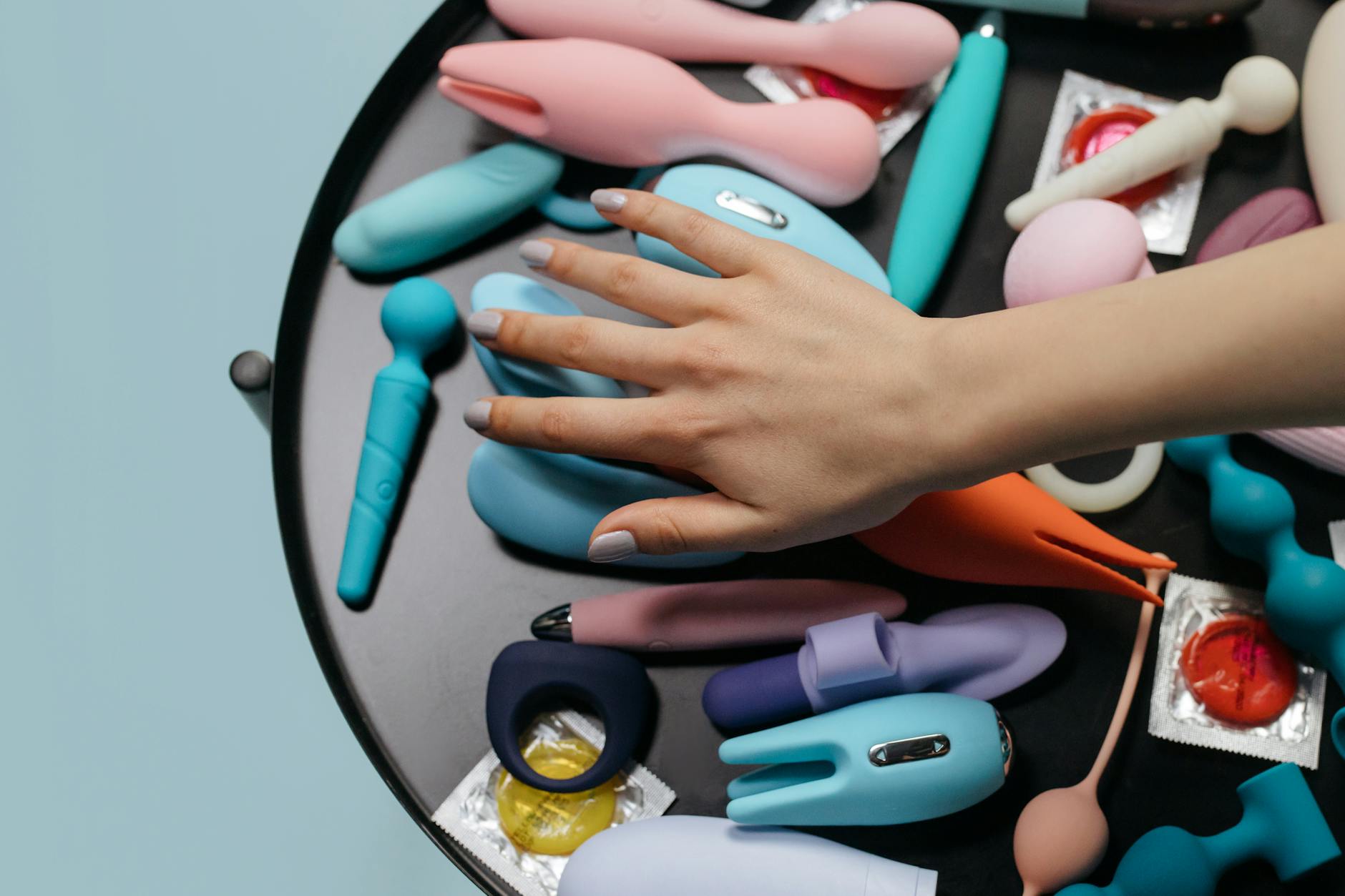
Photo by cottonbro studio on Pexels
The practical angles that actually work
Once you've talked and your partner is willing to try, positioning matters more than you'd think. Here are the setups I recommend most:
You on top. This is often the easiest entry point because you maintain control over the vibrator, the pressure, and the pace. Your partner can focus on movement and connection without managing the toy. You can angle it however feels best, and your hands are free to touch them.
Side by side. You lie facing each other, and either of you can hold the vibrator while maintaining eye contact and touch. This preserves intimacy and makes it easy to shift intensity in the moment without breaking rhythm.
Them behind you. If you're comfortable with penetration alongside clitoral stimulation, your partner can enter from behind while you or they hold the vibrator. This arrangement gives them something to feel and focus on while you get dual sensation.
During oral sex. This is genuinely transformative for some couples. While your partner is going down on you, the vibrator on top of their mouth changes the sensation entirely. They're doing the thing they want to do, you're getting amplified pleasure, and it's one of the most collaborative setups available.
The lemon clitoral vibrator works especially well here because it's small enough to fit easily in your or their hand without taking up a lot of space. The design matters because cramped hands or awkward angles kill arousal faster than anything else.
Managing intensity and real-time communication
Most lemon vibrators have a few speed settings. Start low. This isn't about caution. It's about reading what actually feels good in the moment versus what you thought would feel good in theory.
Talk before, during, and after. "Can you go slower?" "That feels amazing." "Let me adjust the angle." This isn't awkward if you frame it as collaborative problem-solving. You're literally optimizing for mutual pleasure, which is the opposite of awkward.
Your partner might surprise you by wanting to hold the vibrator and control the pace themselves. Let them. Some partners find that having something active to do reduces performance anxiety, which means they're more present and more aroused. That's a win for both of you.
When one of you has a sensitivity issue
If you've read why lemon vibrators work better for sensitive clits, you know that direct vibration can feel overwhelming for some people. Suction-based clitoral vibrators like the Lemon work differently than traditional buzzers because they use air-pulse technology instead of direct vibration, which means the stimulation feels less intense and more diffuse.
If sensitivity is the issue in your relationship, this is actually good news. Show your partner the difference. Let them hold it and feel the sensation on their hand or arm. Most people who were worried about intensity suddenly feel way more open when they realize it's not what they imagined.
The aftermath conversation matters as much as the setup
After you've tried it, talk about what worked and what didn't. Not in an interrogatory way. Just "That was really good. Did you like that?" and "What felt best to you?" and "Anything you'd want to try differently next time?"
This serves two purposes. First, you get actual data for next time instead of guessing. Second, you're reinforcing that this is something you do together, not something you're imposing on your partner. The difference is everything.
If your partner felt disconnected or uncomfortable, take that seriously without making it about you. Sometimes it takes a few tries. Sometimes it's the wrong positioning. Sometimes they need more time to adjust to the idea. All of these are normal and fixable.
The mental shift that changes everything
Here's what I tell couples in my office: using a vibrator with your partner isn't a sign that something's broken. It's a sign that you're interested in exploring pleasure together, which is actually one of the healthiest relationship habits I see.
Partners who can talk about sex, try new things, and adjust based on what they learn stay more connected long-term than couples who stick rigidly to what they've always done. The willingness to evolve together matters more than the specific tool you're using.
Start the conversation this week. Not someday. Not when things feel stale. Now, while you're thinking about it. That's when you'll actually follow through.
Frequently asked questions
Can my partner feel the vibrator inside me if we're having penetrative sex?
Yes, they can feel the vibration, especially if it's positioned so the base or sides are in contact with them. Many partners describe it as a subtle buzzing sensation that adds to their arousal rather than detracts from it. The vibrator won't interfere with the physical sensation of penetration for either of you.
What if my partner is intimidated by the vibrator?
Intimdation usually comes from uncertainty or misconceptions about what a vibrator is "for." Show them that it's a tool you're using together, not a replacement for them. Let them hold it, feel it, and understand how it works. Most intimidation dissolves once someone realizes the vibrator enhances what they're doing, not replaces it. If hesitation persists, take your time and revisit the conversation later rather than pushing.
Should I use the vibrator throughout sex or only at the end?
That's entirely up to you and your partner. Some couples use it during foreplay to build arousal before other types of stimulation. Others use it during penetration for added sensation. Some save it for the finale. There's no right way. What matters is that you're paying attention to what feels good in the moment and adjusting accordingly. Your needs might be different on different nights, and that's okay.
My partner wants to use the vibrator on me but I'm worried about the pressure.
Communicate about pressure in real time. If they're holding it too firmly, say so. You can guide their hand to show them the angle and pressure that feels best. Most partners appreciate this kind of feedback because it means they're actually doing something that works instead of guessing. If you're worried about them understanding, practice on your own hand first so you can show them the sensation you're going for.
Will using a vibrator change the way I orgasm during sex?
Possibly, and that's not necessarily negative. Some people find that adding a vibrator during partnered sex creates a different type of orgasm than they experience solo or with penetration alone. That's not a loss. It's expansion. Your body is capable of multiple types of pleasure. The vibrator might just unlock one you hadn't experienced yet with a partner.
How do I know if my partner actually wants to try this?
Ask directly. Not "Do you mind if we try a vibrator?" which invites a polite "no, it's fine." Try "I'm interested in exploring this together. Would you be open to trying it?" Their answer to a direct question will tell you what you need to know. If the answer is no, ask why. If the answer is yes but uncertain, start small and build from there. If the answer is yes and enthusiastic, you have your answer.