Here's what nobody tells you about pelvic floor tension
Your pelvic floor is not your enemy. But when it's tight, it feels like it is. Tension in that area changes how your whole body responds to pleasure. A Lemon vibrator can feel wonderful or uncomfortable or somewhere weird in between, depending on what's happening with your pelvic muscles. The good news is that knowing what's going on physiologically helps you use your vibrator differently so pleasure actually returns.
What pelvic floor tension actually does
When your pelvic floor muscles are chronically tight, they don't relax fully. This can happen from stress, past sexual discomfort, childbirth recovery, holding emotions in your body, or sitting at a desk for eight hours a day. Your pelvic floor is like any muscle. When it's always switched on, it gets fatigued and starts misfiring.
Here's the cascade: tight pelvic floor muscles mean less blood flow to that area. Less blood flow means less sensation and slower arousal. Then when you try to use a vibrator, the muscle is already activated, so the stimulation can feel too intense, sharp, or almost painful. Some people describe it as vibration hitting a wall instead of melting into pleasure.
This is why orgasms might disappear, or feel blocked, or come with tension in your lower belly or thighs. It's not you. It's architecture.
How the Lemon vibrator works differently when tension is present
The Lemon uses suction and gentle pulsing, not direct friction. This matters for pelvic floor tension because suction draws tissue upward and inward rather than hammering into it. But suction still activates muscles. If your pelvic floor is already gripped, suction can feel like too much sensation too quickly.
What you need is a warm-up phase that tells your nervous system it's safe to relax. The vibrator isn't the first thing you reach for. Your breath is.
Step one: relax before you vibrate
Spend five to ten minutes doing absolutely nothing sexual. Lie down. Put your hand on your lower belly. Breathe so your belly expands, not your chest. This sounds boring and it works.
Why? Because your pelvic floor is controlled partly by your sympathetic nervous system (fight or flight). When you're stressed or holding tension, that system is activated. Deep belly breathing activates the parasympathetic nervous system, which is the relaxation switch. Your pelvic floor literally cannot fully relax until your nervous system gets the signal that you're safe.
If you skip this step and go straight to the Lemon, you're asking your body to relax while you're holding tension. It won't work.
Step two: start with the lowest intensity
The Lemon has multiple intensity levels. When your pelvic floor is tight, start at pattern one or two. Not pattern five because you think you need more sensation. Your nervous system needs to learn that this stimulus is gentle first.
Hold the Lemon against your external tissue only for the first minute or two. Let your body adjust to the sensation. You're not trying to build to an orgasm yet. You're reintroducing your body to pleasure as something that doesn't require effort or tension.
Many people find they need to stop and breathe again halfway through. That's not failure. That's your nervous system still learning. Stop, breathe, move back in.
Step three: add gentle internal work
Once your external tissue feels settled, you can slowly move inward if you want to. But here's the key: you're not pushing. You're inviting. The difference is tension.
If you feel gripping or tightness as you insert the vibrator, pause. Breathe again. Your pelvic floor is still holding. You can't force it open. You can only signal that it's safe to open.
Some people find that using the Lemon on their external tissue only for weeks is actually the right move. Your pelvic floor doesn't need to be penetrated to experience pleasure. The Lemon is brilliant at external stimulation. Use it that way until your body tells you it wants more.
Why lubrication matters even more when tension is present
When your pelvic floor is tight, tissues are drier and more easily irritated. Water-based lubricant isn't optional here. It's part of your foundation. Apply it generously. Reapply as you go.
The lubricant does two things. First, it reduces friction, which reduces the signal of threat that makes your pelvic floor hold tighter. Second, it lets you move the Lemon more gently without that catch or drag that triggers tension.
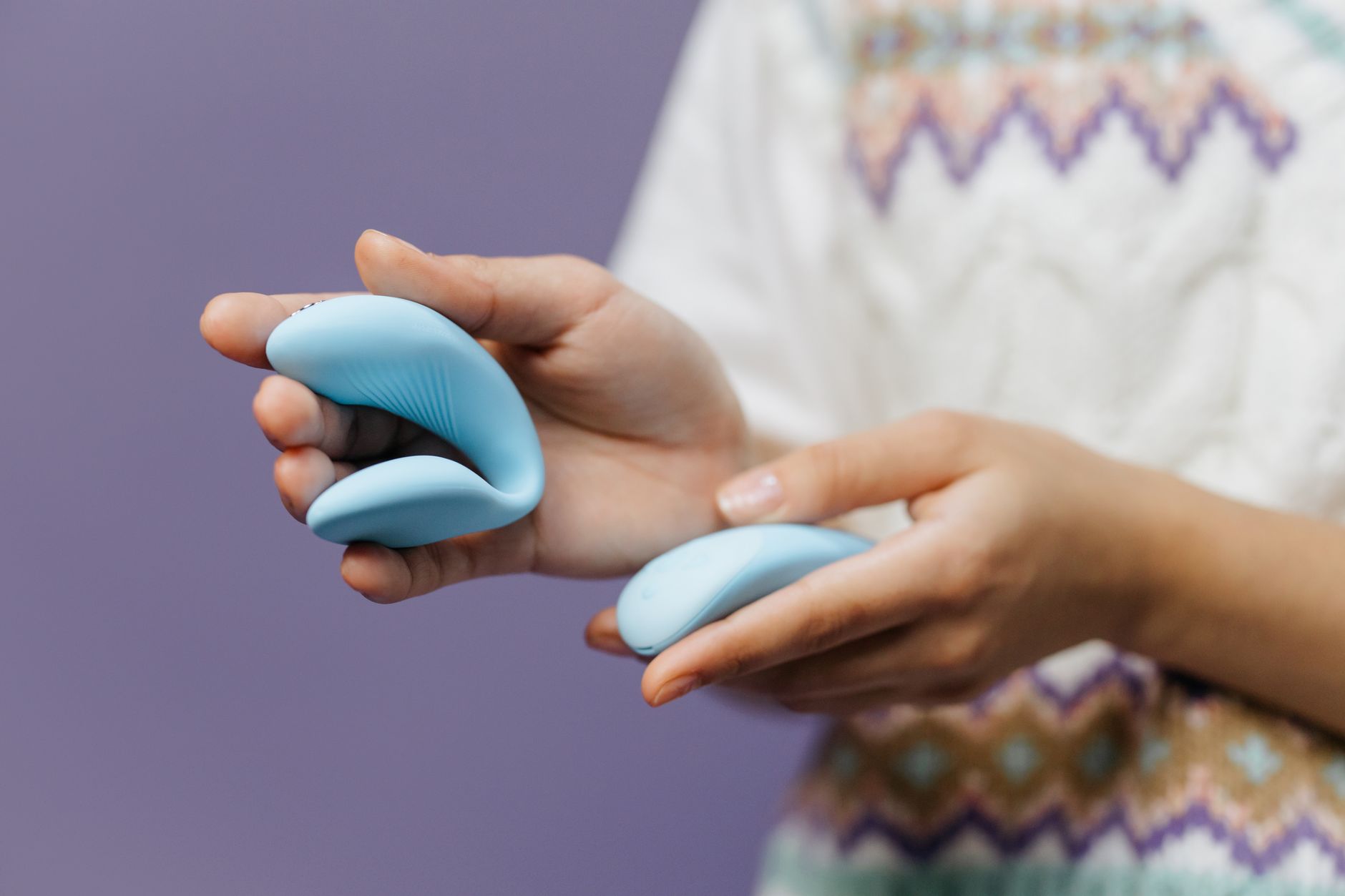
Photo by cottonbro studio on Pexels
The role of your mind in physical release
Here's what I see again and again with clients: the moment you realize your pelvic floor is tight, you tighten it more. You think about the tightness and it gets worse. Your brain is protecting you, but it's overprotecting.
This is why distraction, paradoxically, helps. Some people put on music and think about something else entirely. Some people focus on sensation in their hands or feet instead of their pelvic floor. Some people do a body scan and deliberately soften every muscle they can find except the one they're stimulating.
Find what works for you. But know that fighting the tension with willpower doesn't work. Softening through breath and permission and distraction does.
When to pause and reassess
If you're using the Lemon and you feel sharp pain, not pleasure with sensation, stop. Pain is not a sign you need to push through. Pain is information. Your pelvic floor might need professional support from a pelvic floor physical therapist.
This is not uncommon and it's completely treatable. A pelvic floor PT can teach you release techniques that make a real difference in weeks. Honestly, if you've been struggling with this for months, that investment is worth it. They can also assess whether there's something else going on, like vaginismus or vulvodynia, that needs specific attention.
Building a practice that works
If you have chronic pelvic floor tension, using a Lemon vibrator is part of reclaiming pleasure, not the whole thing. You also need regular breathing practice, maybe gentle yoga or stretching, and probably a conversation with a pelvic floor specialist.
But the vibrator itself, used slowly and intentionally, sends your body a message: pleasure doesn't have to be effortful. Sensation doesn't have to hurt. Your pelvic floor can learn to relax around something that feels good.
Start with your breath. Use the lowest intensity. Take your time. Your body will adjust. And when it does, the Lemon becomes what it's supposed to be: a tool for rediscovering what feels amazing.
People also ask
Can a tight pelvic floor make orgasms impossible?
Not impossible, but harder to reach. A chronically tight pelvic floor restricts blood flow and makes it difficult for your nervous system to move into the relaxation needed for orgasm. Many people with pelvic floor tension report that orgasms feel blocked or incomplete. The good news is that releasing pelvic floor tension, often through breathing, pelvic floor physical therapy, or gentle vibrator use over time, can restore full orgasmic response. It takes patience, but it's reversible.
How long does it take for pelvic floor tension to improve?
This varies, but most people notice a shift within two to four weeks of consistent work. That work includes breathing practice, possibly pelvic floor PT, and intentional vibrator use. Some people see improvement in days if the tension is new or situational. Others with years of chronic tension might need months. A pelvic floor physical therapist can give you a more personalized timeline.
Is using a vibrator actually helpful for pelvic floor tension, or does it make it worse?
It can be both, depending on how you use it. If you jump straight into high intensity or internal stimulation when your pelvic floor is already gripped, you're asking a tense muscle to relax while you're stimulating it intensely. That usually makes tension worse. But low-intensity, external stimulation combined with breathing and nervous system relaxation can actually teach your pelvic floor that sensation is safe. The Lemon works well for this because suction is gentler than direct vibration.
What's the difference between pelvic floor tension and vaginismus?
Pelvic floor tension is chronic muscle tightness. Vaginismus is an involuntary reflex that causes the pelvic floor to clench during penetration or attempted penetration, usually triggered by fear or past trauma. Both feel like tightness, but vaginismus is a protective reflex, while tension is often postural or stress-related. If you can't relax your pelvic floor at all, even with breathing and time, or if penetration is painful, see a pelvic floor PT to figure out which one you're dealing with. Treatment is different.
Can stress and anxiety cause pelvic floor tension?
Absolutely. Your pelvic floor is directly connected to your nervous system. When you're chronically stressed or anxious, your pelvic floor holds that tension. Think of it as your body's stress bucket. People often don't realize how much anxiety they're holding in that area until they start to release it. Therapy, breathing work, and somatic practices all help. Pleasure, especially with tools like the Lemon vibrator, is also part of the solution because it tells your nervous system that your body is safe.
Should I use a vibrator if I have pelvic floor dysfunction diagnosed by a doctor?
Maybe, but check with your pelvic floor physical therapist first. Some types of pelvic floor dysfunction benefit from gentle vibrator use as part of a broader plan. Others need you to hold off until you've done foundational nervous system work. A PT can tell you when the timing is right and how to use a vibrator safely in your specific situation. Don't assume vibrators are off the table. Just get professional guidance on when and how.