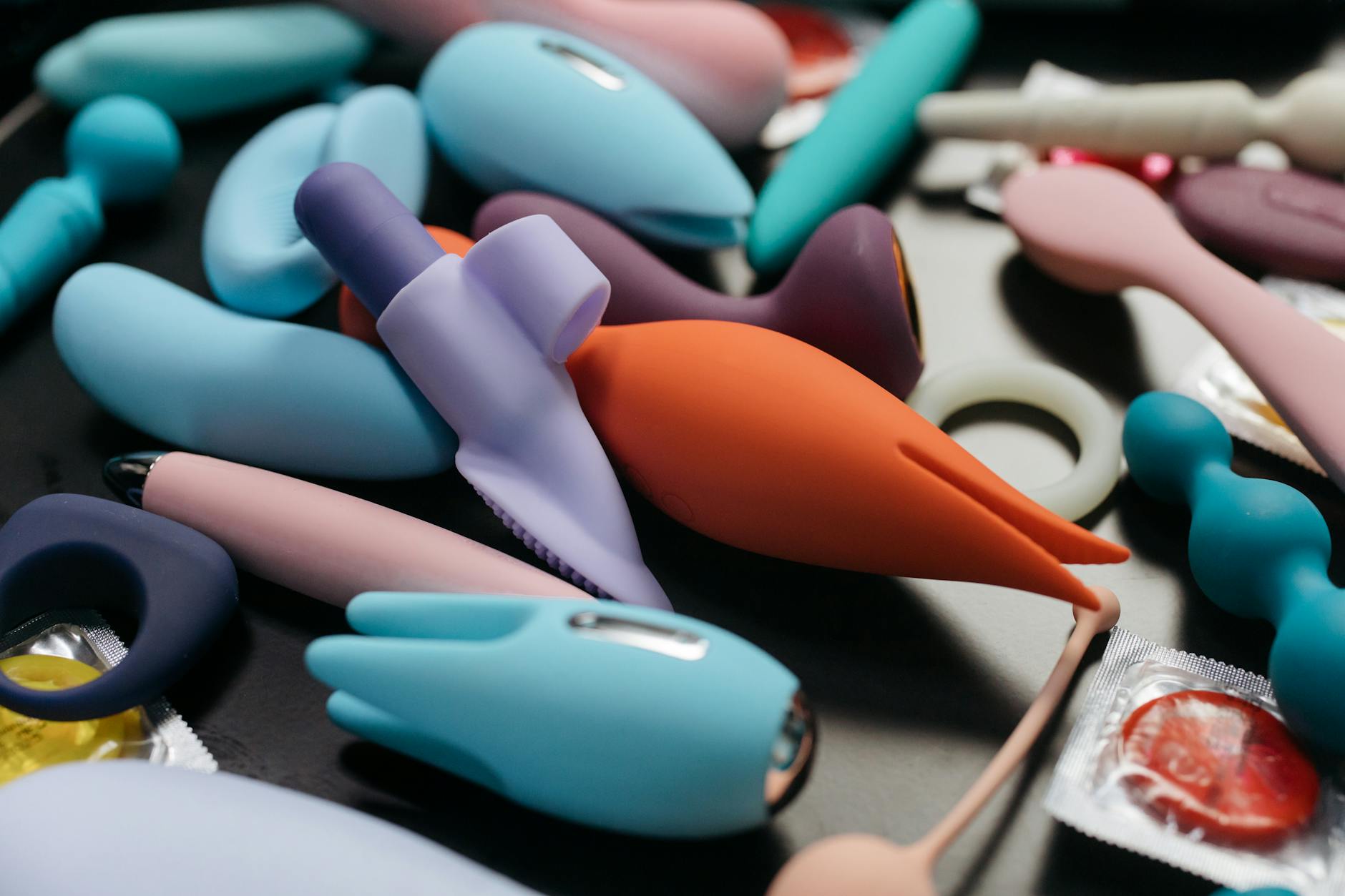
How to Use a Lemon Vibrator When Exploring Pleasure With a New Partner
Let's be real. Introducing a vibrator into a new relationship feels like a conversation you're supposed to have, but almost nobody does. There's a gap between knowing it's fine and actually saying it out loud. That gap is where most people get stuck.
Here's what I've learned from years of working with couples: the awkwardness isn't about the toy. It's about what the toy represents. You're saying, "I want more pleasure," and that requires vulnerability. You're also saying, "I'm not afraid to ask for what I need," which is even scarier in a new relationship where you're still managing impressions.
The good news is that a clitoral vibrator like the Lem can actually make this conversation easier, not harder. It shifts the focus from performance anxiety (his, yours) to mutual exploration. That's the win.
Why this matters in the first year
Statistically, sexual satisfaction in new relationships is genuinely random. One partner might be more vocal, more experienced, or more confident. One might have no idea what they're doing but won't ask for feedback. The first year is when those patterns calcify.
Introducing a lemon vibrator early signals something important: this isn't about what's wrong, it's about what's possible. You're not saying your partner isn't enough. You're saying pleasure is collaborative, not zero-sum. That conversation, had well, actually deepens intimacy faster than almost anything else.
How to bring it up without the cringe
Timing matters. Don't do it mid-sex or right after. Do it clothed, calm, and away from the bedroom. A good opener sounds like this:
"I've been thinking about trying something that might feel really good for both of us. I've heard a lot about clitoral vibrators, and I kind of want to explore it together. Would you be into that?"
That's it. You're not asking permission. You're inviting collaboration. There's a difference.
If your partner says yes right away, great. If they hesitate, ask why. Common responses you might hear: "I don't want to feel replaced," "I thought I was enough," or just nervous silence. All of these are normal. Your job is to translate:
- "I don't want to feel replaced" really means "I'm worried about my role." Respond with: "This is something we do together. I want to explore it with you, not instead of you."
- "I thought I was enough" really means "My confidence just took a hit." Respond with: "You absolutely are. This is about expanding, not fixing."
- Nervous silence means they're processing. Give them space. "No pressure. Let's table it and come back to it." Sometimes that's all they need to feel safe enough to say yes.
The first conversation about the Lem or other lemon vibrators
Once your partner is on board, show them the actual toy. Don't describe it in theory. Hand it to them. Let them feel the weight, the material, the button. Demystification is half the win.
Explain what it does: "It uses suction technology, so it's not like a traditional vibrator. It feels different. Smoother, less intense on the direct contact if you want it that way." If you're using a different lemon adult toy, describe its specific sensation.
Then ask the key question: "Do you want to try this together, or would you rather I use it on my own first so you can see what I like?"
Both options are valid. Some partners want to be present from the start. Others feel less pressure if you've already done the exploration solo and can say, "When you do this, it feels like this." There's no hierarchy here.
Setting yourself up for actual pleasure, not performance
Here's where most couples stumble. They bring the toy into foreplay, and suddenly everyone's hyperaware and trying to look sexy. The pleasure collapses. You're performing arousal instead of experiencing it.
Instead: start in a position where you're not looking at each other directly. Lying on your side, your partner behind you. Or you on your back, them beside you. This removes the "am I doing this right" camera angle and lets you actually feel.
Start without the lemon vibrator first. Touch each other normally. Build actual arousal. This isn't rushing. This is setting the foundation.
When you introduce the toy, narrate it in real time: "That feels good," "A bit higher," "Try a slower pattern." This isn't criticism. It's collaboration. Your partner gets to learn your body. You get to practice asking for what you want. Both of these skills transfer everywhere.
If sensitivity feels off
Some people come to a lemon clitoral vibrator expecting instant fireworks and get... fine. Okay. Not bad, but also not revelatory. This is usually one of two things:
Desensitization from previous patterns. If you've been using vibration the same way for years, your nerve endings adapt. If that's you, taking a break from vibration can reset your sensitivity. With a new partner, this might be the nudge you need.
Overthinking it. New partners add psychological load. You're managing arousal, managing your image, managing their comfort. That's not a good recipe for sensation. Give it three times. By the third time, the novelty of having a partner present fades, and you can actually feel what's happening.
Communication that doesn't kill the mood
There's a myth that talking during sex ruins sex. It doesn't. Robotic communication ruins sex. Natural communication deepens it.
Good talk: "That feels amazing."
Robotic talk: "Could you adjust the stimulation frequency to a lower hertz range?"
Good talk: "I want to feel your hands too."
Robotic talk: "I am experiencing reduced pleasure sensation."
There's room for whimsy and directness and even humor. "A little left," "Yeah, like that," "That made me laugh but also kind of turned me on." Real sentences. Real people.
What to expect from the dynamic
Lot of new couples worry that introducing a vibrator makes things feel clinical or less intimate. The opposite usually happens. You've just said, "I trust you with my pleasure." You've shown vulnerability. You've asked for what you want. That's the definition of intimacy.
Some partners become really protective of the toy time. They want to be the one holding it. Others prefer to focus on direct touch and use the toy as backup. Neither is wrong. The dynamic you develop reflects what feels good to both of you, and that evolves.
For some couples, the toy becomes a regular part of the rotation. For others, it's occasional. Some use it during solo play and prefer partner touch during sex together. All of these are normal. The point isn't how often you use a lemon vibrator. It's that you've expanded the conversation about what pleasure looks like.
When to bring in more exploration
Once you're comfortable with a clitoral vibrator, you might want to explore whether your partner enjoys stimulation too. Not all partners do. Some get overstimulated. Some find it distracting. Some love it. You won't know until you ask.
If you're looking to deepen pleasure work together, exploring other lemon sexual toys or techniques can be natural next steps. Understanding how arousal patterns shift also helps both of you adapt as the relationship develops.
The real win
The best thing about introducing a lemon vibrator early in a relationship isn't the orgasm. It's the precedent you set. You're saying: pleasure is mutual, communication is safe, and asking for what you want makes you more vulnerable, not less. Those three things, practiced over and over, transform relationships.
That's worth the awkward conversation at the start.
People also ask
How do I know if my partner will be receptive to using a vibrator together?
You can't know until you ask, which is both the hard part and the honest part. If your partner cares about your pleasure, they'll at least be willing to listen. That doesn't mean instant yes. It means openness to the conversation. Pay attention to how they respond to conversations about sex in general. Do they get defensive? Curious? Shut down? That tells you what kind of approach might land better. Someone who shuts down needs reassurance that this is about connection, not criticism. Someone who's curious might just need to know you're interested. The ask itself is the test.
Is it normal to feel self-conscious using a vibrator in front of a new partner?
Completely normal. You're doing something intimate while being watched. That's vulnerable. The self-consciousness usually fades after the first time because reality is always less scary than anticipation. Your partner is focused on you, not judging you. Their arousal at seeing you aroused is usually the dominant feeling, not critique. If it helps, you can ask them to focus on touching you elsewhere while you use the toy. That often makes it feel less like a performance and more like collaboration.
What if my partner gets jealous or insecure about the vibrator?
Insecurity usually surfaces as jealousy, so listen to what's underneath. They might fear they're not enough, or that you'll prefer the toy, or that it means something about them sexually. These are feelings, not facts, but they're real feelings that deserve acknowledgment. Don't dismiss it with "that's silly." Instead: "I get why you feel that way. But this isn't about you being not enough. It's about exploring together." Then show them. Use the toy with them present. Let them be part of the experience. Most insecurity dissolves when someone feels included, not replaced.
Can we use a lemon vibrator during partnered sex?
Absolutely. It can be part of foreplay, or incorporated during sex itself. Some positions make it easier than others. If you're on top or side-by-side, access is straightforward. From behind, a partner can hold the toy while they're inside you, or you can use it on yourself. The key is making sure there's enough arousal already built so it feels integrated, not like you're suddenly pivoting to a solo tool. Start with it in foreplay, not as the main event, until it feels natural to both of you.
What if we try it and it doesn't feel good?
That's data, not failure. If the sensation doesn't work for you, it might be timing, position, arousal level, or just that this particular toy isn't your match. Don't force it. Give it a couple of tries in different contexts. If it still doesn't resonate, that's fine. You've still had the conversation that matters: "I want to explore pleasure with you, and I trust you enough to experiment." That's the win, regardless of the toy outcome. There are other lemon clitoral vibrators and other approaches. The fact that you tried together is what counts.
How often should we use a vibrator together?
As often as you both want. There's no ideal frequency. Some couples use it regularly. Others bring it out once a month or less. Some use it during solo play but not partnered sex. The rhythm you develop should feel natural, not obligatory. If you notice you're using it as a substitute for other kinds of touch or conversation, that might be a sign to slow down and reconnect differently. But if it's part of a healthy, varied sex life, frequency doesn't matter. Quality of connection does.