Here's what nobody tells you about quitting the pill
When you stop hormonal birth control, your body doesn't just go back to normal. It goes back to what normal actually is for you. That's not a small thing. For some people, it's a radical shift.
The pill flattens your hormonal cycle, which is part of why it works. Estrogen and progesterone stay steady all month. Once you quit, your body starts cycling again, which means your arousal, sensitivity, and pleasure capacity all start moving too. Some days feel electric. Other days feel muted. This isn't dysfunction. It's your body remembering how to be itself.
Why sensation changes when you come off hormonal birth control
Hormonal birth control suppresses ovulation by maintaining steady hormone levels. This dampens the natural fluctuations that drive libido spikes. Estrogen and testosterone both typically run lower on the pill than they do in a natural cycle.
When you stop, a few things happen at once:
Your testosterone returns. Yes, people with ovaries produce testosterone, and yes, it's a major player in desire. Off the pill, you often feel more spontaneous urges. Your clitoral tissue becomes more responsive because estrogen levels fluctuate (high estrogen = better blood flow = more engorgement). The sensitivity of your vulva can increase noticeably, which feels amazing one week and overwhelming the next.
Your cycle returns, which means your arousal literally has a rhythm again. You might find you're much more interested in sex around ovulation (day 12-16 of your cycle) and less interested in the week before your period. This isn't weird. It's biology.
The first three months are the realignment phase
Your body is essentially relearning its own chemistry. This means pleasure might feel unpredictable at first.
Some people report that orgasms are harder to reach in month one. Others say they're impossibly easy. Both are normal. Some notice their vulva feels more sensitive to touch. Some feel less responsive overall. All of this can change week to week.
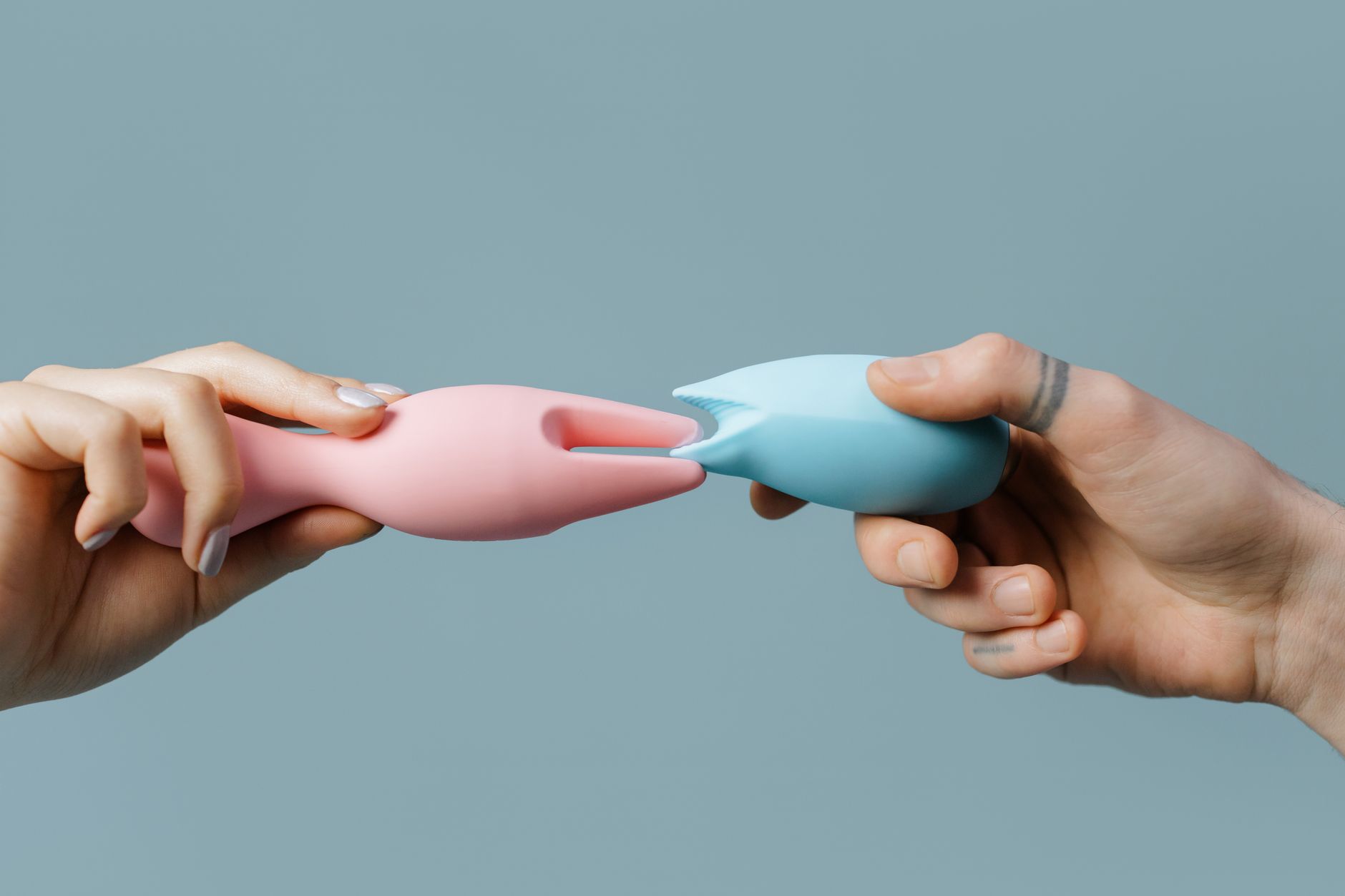
The clitoral suction mechanism of a lemon vibrator is particularly useful during this phase because it doesn't rely on direct friction intensity. Suction stimulates the clitoral nerve endings through gentle pressure changes rather than vibration alone. This is helpful if you're experiencing heightened sensitivity and need a gentler approach, or if you're in a lower-arousal week and need something that works with your body rather than forcing a response.
How to approach sensation exploration off the pill
Three guidelines that help my clients through this transition:
Start low, go slow. Your sensitivity baseline is moving. You don't know yet what your new normal intensity preference is. Begin with the Lemon vibrator on the lowest setting. You can always turn it up. You can't un-feel something that was too intense.
Track what you notice. Not obsessively. Just mentally note: which week of your cycle do you feel most responsive? When do you need more warm-up time? Are you more responsive after exercise, or when you've had more sleep? Off the pill, your pleasure has seasons. Knowing yours helps you work with your body instead of against it.
Budget more time for arousal. Many people report that arousal takes slightly longer to build off hormonal birth control, especially in the first few months. Your body is rebuilding its own arousal signaling system. Give it fifteen to twenty minutes to warm up. The lemon clitoral vibrator's suction pattern can help trigger arousal more efficiently than vibration alone if you're finding it takes longer to get there.
The intensity adjustment that usually helps
Most of my clients who've quit hormonal birth control report that they prefer starting on patterns two or three of their lemon vibrator, rather than jumping straight to high intensity. This is partly because sensitivity is often heightened, and partly because your nervous system is rebuilding its pleasure pathways.
If you find that you're not reaching orgasm, the issue usually isn't that the vibrator isn't strong enough. It's that your arousal building is incomplete. Spend more time with manual stimulation or lower-intensity patterns before moving to higher intensity. Let your body warm up fully.
If you find that sensation feels too intense, that's a signal to back off the pattern level and spend longer on gentler stimulation. Your pelvic floor might also be tense if you're adjusting to new sensations. Take a breath. Many people find that learning to relax the pelvic floor fully actually increases pleasure capacity more than anything else during this transition.
Partner dynamics shift too
If you're in a relationship, your partner might notice that your arousal and desire patterns have changed. This is real, and it matters to acknowledge it separately from any relationship friction.
Your increased testosterone might mean you initiate more often. Or you might have a clearer sense of what you want, which feels like a change to a partner who's used to you being more accommodating. Some couples find this reconnection exciting. Others need time to recalibrate together.
The Lemon vibrator can actually be useful in solo exploration during this phase because it gives you space to learn your new body's preferences without performance pressure. Once you know what feels good to you now, sharing that with a partner becomes easier.
When hormonal shifts get confusing
If you're three to four months off hormonal birth control and arousal still feels muted or completely absent, that's worth checking with a doctor. Sometimes desire doesn't return on its own timeline. This can mean your hormones need more time to regulate, or it can signal something else entirely (thyroid issues, nutritional deficiencies, depression). Don't assume it's broken. Just get it checked.
If pain appears during sex after quitting the pill, that's also worth mentioning to a doctor. Most people experience improved lubrication off hormonal birth control because estrogen levels cycle naturally. If you're experiencing dryness, that's unusual and worth investigating.
The good part
Most people report that their most consistent, easiest orgasms come after they've been off hormonal birth control for four to six months, once their cycle has stabilized. Your arousal has seasons now, which means some weeks feel transcendent. You have access to spontaneous desire you might not have felt in years. Your sensitivity is heightened. You can actually feel the difference in your body over your cycle, which is information you didn't have before.
The lemon clitoral vibrator fits naturally into this rebalancing because suction-based stimulation works with your body's natural responsiveness rather than forcing a response. As your cycle settles and you learn your new baseline, you'll find the patterns and intensities that match your actual pleasure capacity now, not the flattened version you had on the pill.
People also ask
How long does it take for arousal to return after stopping birth control?
Most people notice shifts in arousal within the first two to four weeks. Your cycle will typically regulate within three to six months. But full hormonal rebalancing can take up to a year. Be patient with yourself. If it's been longer than six months and you're still experiencing no arousal, that's worth discussing with your doctor.
Can a lemon vibrator help if I'm feeling numb after quitting the pill?
Absolutely. If you're experiencing lower arousal or sensation in the early weeks off hormonal birth control, the Lemon vibrator's suction pattern is gentler than traditional vibration and can help you reconnect with sensation without overwhelming your nervous system. Start on the lowest pattern and focus on presence rather than outcome.
Will my sex drive go back to what it was before I went on the pill?
Maybe, maybe not. If you went on the pill as a teenager, you don't actually know what your off-pill baseline is. You're learning it for the first time as an adult. For most people, this baseline is higher than it was on the pill, but different from what they expected. Give yourself permission to let it be what it actually is.
Is it normal to have a really high sex drive right after quitting the pill?
Completely normal. Many people experience an estrogen and testosterone surge in the first few weeks off hormonal birth control. This often feels like a sudden increase in spontaneous desire and arousal. Enjoy it. It usually stabilizes as your cycle regulates, but that heightened response period is real and legitimate.
What if orgasms feel different after quitting hormonal birth control?
They will feel different. Orgasms are partly neurological, partly hormonal. When your hormones shift, the sensation shifts too. For most people, this means stronger, more consistent orgasms once the cycle stabilizes. You might experience more intense sensations around ovulation and lighter sensations in the luteal phase. This is normal and actually information about your cycle.
Should I use the Lemon vibrator differently on different weeks of my cycle?
You might want to. Many people find they need gentler stimulation and longer warm-up in the luteal phase (the week before their period) and are more easily aroused around ovulation. Experiment with different patterns across your cycle and notice what feels good when. Your pleasure map is part of your body's language now.
The bottom line
Quitting hormonal birth control is a major recalibration. Your body isn't broken. It's remembering how to signal its own desires. The lemon clitoral vibrator is a tool that works with that recalibration rather than against it. Give yourself time, stay curious about what feels good now, and know that what you're experiencing is completely normal. Your pleasure matters, and your body's new responsiveness is worth exploring.
If you have questions about this transition or need personalized guidance, we're here. Reach out to us.