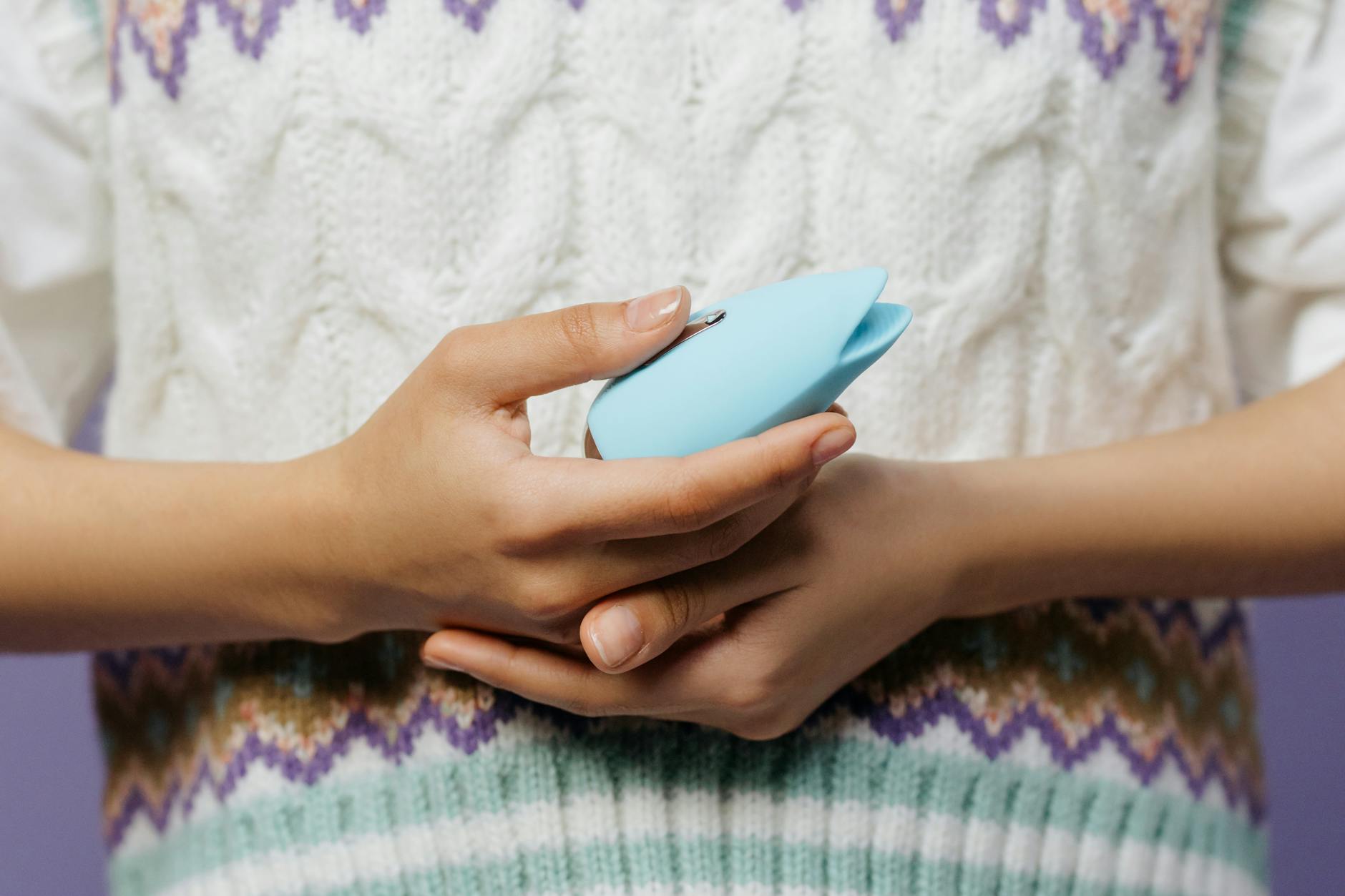
Here's what couples usually get wrong about vibrators
Most people introduce a vibrator into partnered sex as a solution to a problem. "You're not finishing." "This would help us." "Let's try this." The vibrator shows up as a fix, not a choice. And the person holding it often feels like they're admitting defeat. Sound familiar? That's the opposite of how this should feel.
A lemon vibrator isn't a replacement for your partner. It's an expansion of what solo pleasure can be when you're together. That distinction matters because it changes the entire conversation from "we need to fix this" to "let's explore this together."
Why couples resist vibrators (and why that's worth understanding)
The resistance usually falls into three buckets. First, there's the ego thing. Partners worry that a vibrator means they're not enough. Second, there's the awkwardness. How do you even bring it up? Third, there's confusion about what a vibrator is supposed to do in partnered sex. Is it replacing them? Replacing manual stimulation? Is it for one person or both?
None of these worries are stupid. They're completely normal. But they're also based on a misunderstanding of what pleasure actually is in a relationship.
Here's the reframe: Your partner's orgasm is not a reflection of your sexual prowess. It never was. An orgasm is a neurological event triggered by the right combination of stimulation, mental state, and timing. A clitoral vibrator like the Lem is a tool that helps create that combination. Using it doesn't diminish you. It actually deepens the intimacy because you're both focused on the same goal: pleasure.
The conversation before the vibrator arrives
Don't surprise your partner with a sex toy. I don't care if you think it's cute or sexy. Surprise vibrators backfire hard.
Instead, start small. You might say something like: "I've been thinking about trying something new together. I read that a lot of couples use clitoral vibrators during sex, and I'm curious if you'd be interested in exploring that together."
Notice what that does. It's specific (a clitoral vibrator), it's collaborative (together), and it's low-pressure (curious, exploring). It also normalizes it by mentioning that other couples do this. People feel braver when they know they're not alone.
If your partner seems hesitant, the next step is curiosity, not persuasion. Ask what they're worried about. Listen. Don't defend or argue. Often what emerges is one of those three worries I mentioned. Once you know which one it is, you can actually address it.
When you have a partner who's unsure
If they're worried about ego, you might say: "My pleasure isn't about you or not you. Sometimes my body needs specific stimulation to finish, and that's just biology. A vibrator isn't a replacement for you. You're here with me. We're doing this together. That's what matters."
If they're worried about what it means, explain it practically. A clitoral vibrator provides sustained, targeted sensation that hands can't replicate. It doesn't change what your partner does. They're still touching you, still involved, still present. The vibrator just makes one part of the experience more effective.
If they're worried about awkwardness, you can defuse that by making it casual. "We'll figure out how to use it as we go. If it's weird, we'll laugh and try something else. No pressure."
The first time you use a lemon vibrator together
Start during foreplay, not during penetration. This removes the performance aspect and lets both of you focus on sensation and comfort.
Begin with the vibrator on the lowest setting. This isn't the time to test all the patterns. You're acclimating to the experience. Your partner might start by using it on you while kissing you or touching you manually somewhere else. This creates a situation where your partner is still active and involved. They're not passive. They're making choices about how the vibrator is used.
Pay attention to what works. You might find that pattern 2 feels better than pattern 1. You might notice that you like a particular rhythm combined with manual touch. That's information for next time.
Talk during this. Not in a clinical way, but simple stuff. "That feels good." "Try it slower." "Move it a tiny bit left." This keeps communication flowing and reminds your partner that you're still connected.
If an orgasm happens, great. If it doesn't, that's fine too. The goal on the first try is comfort and exploration, not results.
When you use a lemon vibrator during penetrative sex
This is where a lot of couples get confused. Can you use a vibrator during penetration? Absolutely. But it requires communication and some logistical thinking.
The most common approach is for the receiving partner to hold the vibrator or for the partner to hold it while also being inside. This takes some coordination. You might start by figuring out angles and positioning before any movement happens. It's less sexy than movies make it seem, but it's honest, and honesty is way better than fumbling in the dark.
Some couples find it easier for the receiving partner to use the vibrator on themselves while their partner is inside. This actually works really well because you maintain full control over pressure, angle, and movement. Your partner can focus on their own sensation and pace.
The key is that penetration and clitoral stimulation are happening in tandem, but they're not dependent on each other. You can pause penetration to adjust the vibrator. You can ease up on vibrator speed if penetration gets intense. You're both present and adjusting as you go.
What shifts when you bring a vibrator into your relationship
Honestly? Sometimes nothing dramatic happens the first time. Sometimes it's awkward. Sometimes your partner uses it and you realize you actually don't like it, and that's okay. The point isn't to love it immediately.
What often does shift over time is the permission structure. When you've used a vibrator together and it didn't destroy your relationship, you've proved something to each other. You've proved that pleasure is collaborative, not competitive. You've proved that bringing a tool into sex doesn't diminish the intimacy. You've proved that talking about what you want actually works.
Many couples find that after introducing a lemon vibrator, they start talking about pleasure more openly. They ask for what they want. They notice that orgasms become less complicated. They feel less pressure to perform.
Some discover that solo pleasure changes too. If you've used a lemon vibrator with your partner, you're more likely to use it alone. And that's actually really good for relationships. People who have regular solo pleasure typically have better sexual response with partners. You know what works. You're less frustrated. You have lower anxiety. You bring more presence to partnered sex.
When your partner uses the vibrator on you
This is often the most intimate way to use one together. Your partner is controlling the speed, the pattern, the pressure, and the timing. You're receiving. This inverts the usual dynamic where penetration is the main event.
Many people who experience this for the first time report feeling truly seen. There's something about having your partner focus entirely on your pleasure, making micro-adjustments based on your body's response, that creates deep connection.
Here's what helps this work: Tell your partner what you feel. "Slower." "Right there." "A little faster." Give them information. This isn't them failing if they can't guess what you need. It's them succeeding because you're teaching them.
Also, if your partner seems hesitant to hold the vibrator long enough or worried they're doing it wrong, reassure them. "You're doing great." "Just hold it here for a minute." "I like how this feels." Positive feedback makes them more confident and more willing to try this again.
The relationship benefit people don't talk about
When couples explore pleasure together with tools like lemon vibrators, they're actually rebuilding a specific skill: asking for what they want. This matters in sex, but it matters everywhere. Partners who can say "I want this" or "That doesn't feel good" in the bedroom become partners who can say it in other parts of life too.
You're also creating a shared experience that's just yours. It's intimate in a different way than traditional sex. It's collaborative. It requires vulnerability and trust.
And here's the thing nobody mentions: It gives you an out when one person doesn't orgasm. Instead of that becoming a problem to solve or a source of awkwardness, it just becomes neutral. "We used the vibrator and it was nice," you might say. "Maybe next time we'll try a different angle." You've removed the shame from the equation.
When to see a therapist about this
If your partner refuses to even discuss it and that's creating resentment, that's worth exploring with a professional. Not because there's something wrong with wanting to use a vibrator, but because the communication breakdown is the actual issue.
Similarly, if you feel pressured to use a vibrator you don't want to use, or if your partner is using it in a way that makes you feel excluded or objectified, that's a conversation that might benefit from a third party.
Most of the time, though, the resistance dissolves once you've had an actual conversation. Once you've explained why you want to explore this. Once your partner understands that their pleasure matters and that tools just make pleasure easier to access.
A lemon vibrator won't save a broken relationship. It won't fix poor communication or deep incompatibility. But in a relationship with decent foundation and some willingness to explore together, it's a surprising doorway to more connection, more pleasure, and more honesty about what you both actually want.
People also ask
Is it normal for couples to use vibrators together?
Completely normal. Studies on couples' sex toy use show that the vast majority of couples who try vibrators report positive experiences and increased satisfaction. The normalization around this has shifted dramatically in the past decade. You're not unusual. You're actually in line with how most couples approach pleasure now.
Will using a vibrator make my partner feel inadequate?
Only if the conversation around it frames it that way. If you approach it as a tool for shared pleasure rather than a replacement for your partner, that narrative doesn't land. The key is actually letting your partner hold and use the vibrator too. When they experience the sensation themselves, they understand immediately that it's not about their insufficiency. It's about exploring sensation together.
How do I introduce a lemon vibrator to a partner who's resistant?
Start with conversation, not the product. Explain why you're interested without making it a demand. Listen to their actual concern. Often it's not really about the vibrator. It's about feeling replaced or worried about judgment. Once you know the real worry, you can address it directly. Sometimes just giving your partner time helps too. Resistance often softens once they know you're not going anywhere and this isn't a dealbreaker for you.
Can we use a lemon vibrator if my partner has erectile challenges?
Absolutely, and in fact, it can help. Erectile challenges often create performance anxiety, which makes the challenge worse. When a vibrator is involved, the focus shifts away from penetration as the main event. Your partner can be involved in other ways, and there's less pressure on their body to perform. Many couples find this actually reduces ED-related anxiety over time because the pressure decreases.
What if I like the vibrator more than I like sex with my partner?
That's not really about the vibrator. That's about incompatibility or relationship issues that would exist regardless. A vibrator is very efficient at creating specific sensations. It's not going to match the full experience of being with another person unless there's something missing in that relationship already. If you notice this pattern, that's worth exploring either alone or with a therapist. It might mean you need more foreplay, more focus on your pleasure, more emotional connection, or it might mean the relationship isn't meeting your needs. The vibrator just made it visible.
How often should couples use vibrators together?
As often as you both want to. There's no minimum or maximum. Some couples use them every time they have sex. Some use them occasionally. Some use them during certain types of sex but not others. The only rule is that it should feel good and consensual for both people. If either person is using it out of obligation or pressure, that's when to pause and reassess.
Final thought
Bringing a lemon vibrator into a relationship isn't about fixing something broken. It's about being curious together. It's about saying "I want to know what feels good to both of us and I want to explore that with you." That's a statement of connection, not disconnection. If you're considering this, that intention is already there. The vibrator is just the tool you use to act on it. If you want to talk through how to navigate this conversation with your partner, we're here to help.