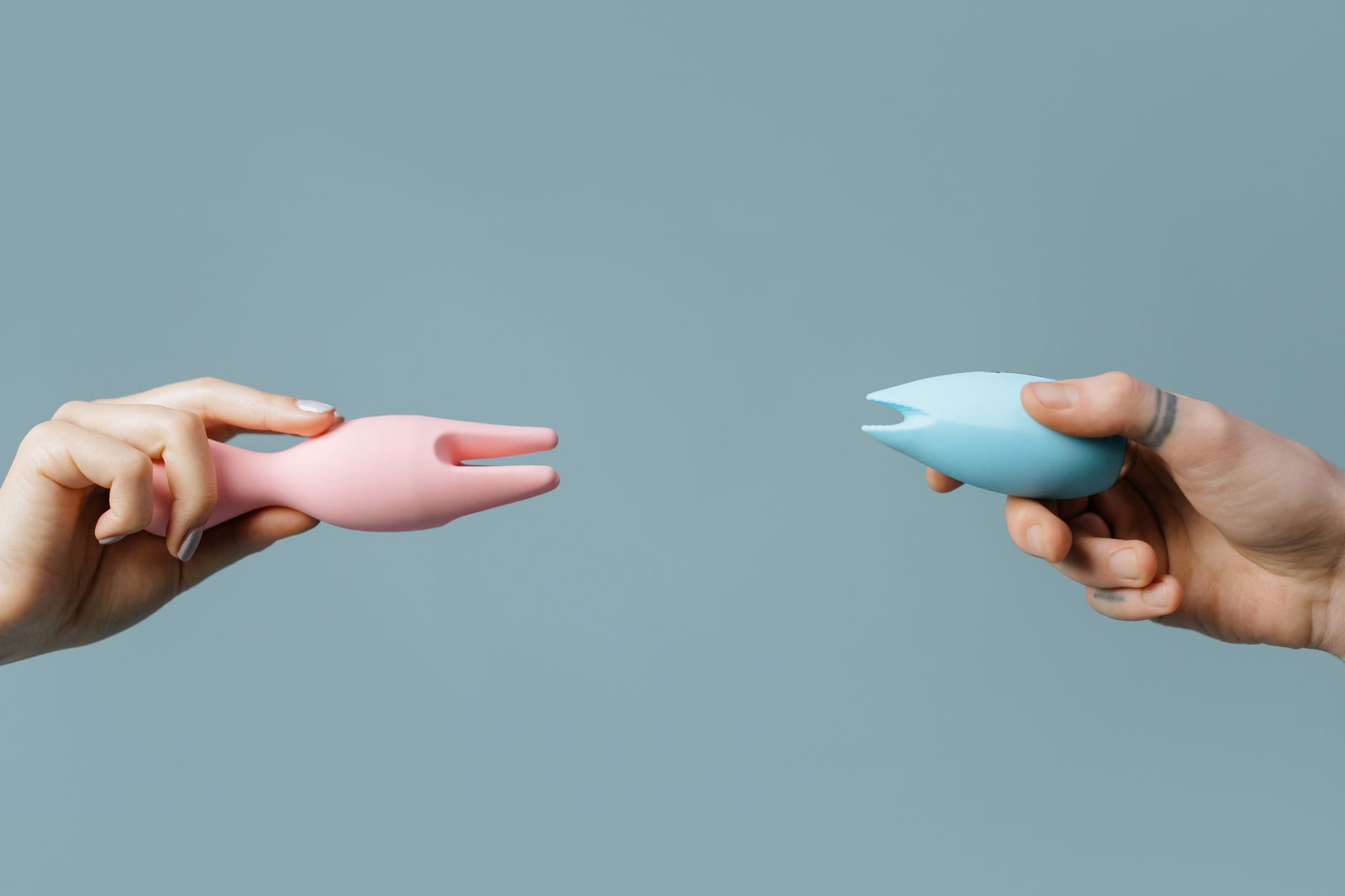
Let's be real about grief and your body
Grief doesn't kill desire. It hijacks it. When you're processing loss, your nervous system is running a survival program. Pleasure gets deprioritized. The signals that usually reach your brain get redirected to keeping you standing upright through the day. Your clitoris isn't broken. Your capacity for arousal isn't gone. But right now, it's not accessible. And that's not a personal failure. It's a neurological fact.
I've worked with clients through loss for decades. The pattern I see most often is that people blame themselves for not feeling like themselves sexually. They think desire should return on some predictable timeline. Then they judge themselves for being "stuck," which adds shame on top of grief. That's the real problem. Not the lack of arousal. The guilt about it.
Why grief shuts down arousal in the first place
When you lose someone or something significant, your brain shifts into what neuroscientists call threat-response mode. Cortisol and adrenaline spike. The parts of your brain responsible for pleasure, future planning, and intimacy dim. This isn't weakness. It's your nervous system doing exactly what it evolved to do: conserve resources during crisis.
Your body is asking a sensible question: Is this a safe time to experience pleasure? And right now, your nervous system is answering no. Not forever. Just now.
Add to that the cognitive load of grief itself. You're carrying new thoughts, new memories, a rearranged identity. Your mental RAM is full. Sexual pleasure requires a certain amount of mental presence. It requires you to trust your body enough to let your guard down. Both of those are exhausting when you're grieving.
Some people also carry guilt about pleasure itself after loss. It can feel disloyal, like you're moving on too quickly, like you don't miss the person or life you lost enough. That's a separate conversation that deserves real attention, ideally with a therapist. But it's worth knowing that you might be unconsciously suppressing arousal as a way of staying faithful to your grief.
Starting where you actually are
Here's the mistake I see most often: people try to force their way back to "normal" sexuality. They assume that if they just used their lemon vibrator, or tried harder with a partner, arousal would return. It doesn't work that way. Trying to push through grief into pleasure is like trying to run a marathon while recovering from surgery. Your body isn't ready, no matter how badly your mind wants it to be.
Instead, I ask clients to meet themselves where they are right now. That might mean.
Weeks or months of zero sexual interest. That's not a problem to solve. That's a season to accept.
Occasional flickers of arousal that feel strange or guilty. Notice them without judgment. Don't act on them if it doesn't feel right. Just notice.
Physical sensations that feel disconnected from emotional meaning. Pleasure without your usual context can feel weird or even wrong. That passes.
One of the ways I help clients is to separate the idea of "sexual pleasure" from "physical sensation." Early in grief recovery, you might not be ready for partnered sex or intentional solo sessions with clitoral vibrators. But you might be ready to notice warmth. You might be ready to feel your skin and not immediately judge it. You might be ready for a bath, a massage from a partner, or even light touch that isn't going anywhere. That's progress. That counts.
Rebuilding sensation without the pressure
When you're ready to experiment again, here's what actually helps. And I mean actually, based on what I see work in practice, not what sounds good in theory.
Start with nonsexual touch. If you have a partner, ask them to touch your arm, your hand, your back in a way that has nowhere to go. No agenda. Fifteen minutes of touch with zero expectation of arousal or escalation. Your nervous system needs to remember that touch can be safe without immediately meaning something.
Reclaim sensation on your own terms. Before you touch your clitoris, try touching your whole body with curiosity. Your thighs, your belly, your breasts. Notice temperature changes. Notice how different parts of your skin respond. You're rebuilding the connection between your brain and your body. That takes time.
Use tools that feel gentle. When you do use a clitoral vibrator like the Lem from Shop Lemon Vibrators, start on the lowest setting. Don't use it with the intention of reaching orgasm. Use it to listen to what your body is telling you. Some days that might be "not right now." Some days it might be "this feels different than it used to, and that's okay."
Accept that pleasure might not feel familiar. After grief, arousal and orgasm can feel different. Slower, quieter, or strangely intense. You might not recognize it at first. That's not a sign you're broken. That's a sign your nervous system is learning how to access pleasure again from a new place.
When a partner is involved
If you're grieving with someone else in your life, this gets more complex. Your partner might also be grieving, or they might be waiting for you to feel normal again, or they might be worried about pushing you, or they might not understand why you don't want to have sex when you did before.
The best thing you can do is name it directly. Not "I don't know when I'll feel like sex again." That's too open-ended and puts pressure on both of you. Instead: "My nervous system is in survival mode right now. Sex doesn't feel accessible to me right now. That doesn't mean it's broken. It means I need us to be patient together. Here's what would help me feel safer: touch without expectation, maybe time for us to just be in the same room, anything that doesn't go anywhere."
If you're rebuilding intimacy after major life stress, this approach applies even more. Your partner needs to hear that you're not rejecting them. You're protecting yourself while you heal.
The timeline question nobody asks
People often ask me: when should I feel normal again? The answer is: grief doesn't have a sexual recovery timeline. Some people reconnect with desire in weeks. Others need months or years. There's no "normal." There's just whenever your nervous system feels safe enough to open up again.
But here's something I tell clients that often helps: you don't have to wait until you feel ready to start softly exploring sensation again. Waiting for readiness can mean waiting forever. What helps more is taking tiny steps, with zero pressure, and letting your body lead. One week that might be a shower where you notice temperature on your skin. The next week it might be your partner's hand on your shoulder. The following week it might be touching yourself gently, with no goal in mind.
Those small explorations aren't about forcing yourself back to normal sexuality. They're about gradually letting your nervous system know that it's safer than it feels right now. And that rebuilding happens in millimeters, not miles.
When to seek actual help
If you're more than a year into grief and pleasure still feels completely unavailable, talk to a therapist. Not because something is wrong with you, but because sometimes grief can layer into depression in ways that benefit from professional support.
Same goes if you notice that your sexuality has become completely disconnected from your partner or from yourself in ways that feel scary. Or if pleasure has returned but with a strange quality, like you're having sex but feel completely absent from your body. That dissociation is your nervous system's way of managing unbearable feeling. It's treatable, but it needs more than a vibrator.
And if you're grieving and the absence of desire has become another thing to grieve, talk to someone. Grief is already complicated. Adding shame doesn't help.
The permission you might need
Let me say this directly: you don't have to want sex while you're grieving. You don't have to push yourself back to sexuality on any timeline. You don't have to feel guilty about your body being unavailable. Pleasure will come back when your nervous system decides it's safe. That's not weakness. That's not broken. That's your body doing its job.
When you do start rebuilding arousal, go slow. Use tools like Shop Lemon Vibrators' clitoral vibrators gently. Notice sensation without forcing it into anything. Let your partner know what you need. And give yourself credit for the millimeters, not the miles. That's where healing actually happens.
Frequently asked questions
How long after grief should I wait before using a vibrator again?
There's no set timeline. Some people feel ready in weeks, others need months. The question to ask isn't when you should feel ready, but what tiny step feels slightly comfortable today. That might be holding a vibrator without using it. That might be looking at one and deciding not to. That might be using it on the lowest setting with zero expectation. Let your body lead, not your calendar.
Is it normal to feel guilty about pleasure while grieving?
Completely normal. Your brain might interpret pleasure as moving on, or being disloyal to your loss, or not missing someone enough. Those are grief stories, not facts. But they're real feelings that deserve attention. Working with a therapist can help untangle what's biological (grief shuts down arousal) from what's psychological (guilt about having any pleasure at all).
Can clitoral vibrators like the Lem actually help rebuild arousal after loss?
They can be part of it, but not the whole picture. A vibrator is a tool for reconnecting with physical sensation. But you also need time, safety, partner understanding, and sometimes professional support. A vibrator on the lowest setting, used with curiosity and zero pressure, can help teach your nervous system that pleasure is safe again. But it's not a shortcut through grief.
What if I feel arousal returning but it feels different than before?
That's actually common and usually temporary. Grief changes your brain chemistry. When it starts to settle, arousal might return feeling quieter, faster, slower, or more intense than it used to. That's not permanent. Your sexuality will find its new baseline over time. Keep noticing without judgment.
Should I tell my partner that I'm struggling with arousal after grief?
Yes. Not as a problem to solve together, but as a reality to understand together. Something like: "I'm grieving and my body has kind of shut down around pleasure. That's not about you. That's about my nervous system being in protection mode. Here's what would help me feel safer." That clarity prevents your partner from personalizing something that has nothing to do with them.
Is dissociation during sex after grief something I should worry about?
Notice it first. Some dissociation after grief is normal as your nervous system learns that pleasure can happen safely again. But if it's persistent, or if you feel completely absent from your body during any kind of physical intimacy, that's worth talking to a therapist about. It's usually treatable with the right support.
Your pleasure matters. And so does your grief. They don't have to exist in separate timelines. Start where you are. Take the smallest next step. Your nervous system will let you know when it's ready to open up again.