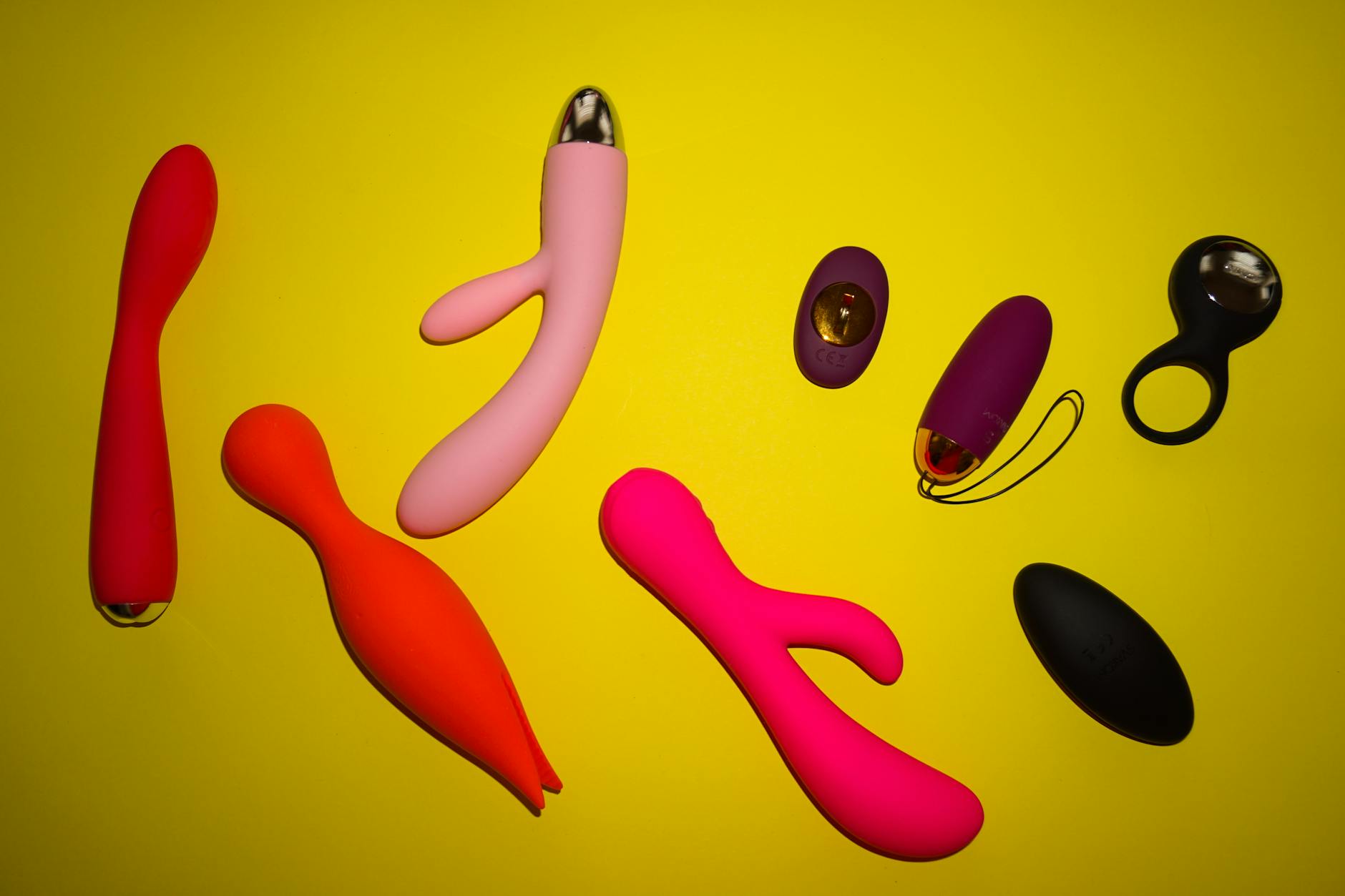
Let's talk about the thing you're avoiding
You want to bring a lemon vibrator into your relationship. You've thought about it. Maybe you've even researched them. Hello Nancy's clitoral vibrators keep showing up in your browser history. But every time you rehearse the conversation in your head, you picture it going sideways: defensiveness, hurt feelings, the implication that something is wrong with what you already have.
Here's the thing: that script you're running is almost never what actually happens. Most of the time, the conversation you're dreading is way simpler than the one you've been rehearsing.
Why you're nervous (and why it matters)
The anxiety usually lives in one of three places. First, you're worried your partner will think you're bored with them or that your body is broken. Second, you're afraid it's a bigger relationship problem than it actually is. Third, you don't want to hurt their feelings or trigger their insecurity.
All of those are real concerns. None of them are actually about the vibrator.
Here's what I see in my practice over and over: the couples who struggle most aren't the ones who use toys. They're the ones who want to use toys but frame the conversation as "something is missing" instead of "I want to try something new." That reframing changes everything.
A lemon vibrator isn't a diagnosis. It's a new sensation. When you stop treating it as evidence of a problem, your partner usually stops too.
Timing is genuinely half the battle
Don't bring this up during or right after sex. Don't bring it up when you're both stressed, hungry, or half-asleep. Don't spring it on your partner in a moment when they're already feeling vulnerable.
Pick a time when you're both relaxed, fed, and have maybe 15 minutes to actually talk. Afternoon coffee on a weekend works. A quiet moment after dinner when the kids are asleep works. A drive works, weirdly, because you're side-by-side instead of face-to-face, which makes hard conversations easier.
What doesn't work: pillow talk, drunk conversation, or right after a fight. The stakes feel lower when the emotional temperature is already neutral.
The frame that actually opens the door
Honesty matters here, so pick the truth that feels most honest to you. These are the frames that work:
"I've been curious about trying something new with you. I found this clitoral vibrator that's designed differently than what I expected, and I think we might both enjoy it."
Or: "I read about suction stimulation and I'm intrigued. There's this device called the Lem that gets really good reviews. Would you be interested in exploring that together?"
Or: "I want to feel more sensation during sex, and I think using a toy together could be fun. I'm not bored with you. I just want to expand what we're doing."
Notice what these have in common. They're specific (you've named the toy or at least the type). They're partnered ("with you," "together"). They're about expansion, not substitution. And they're framed as curiosity, not criticism.
What doesn't work: "I need this because you're not enough." That's the opposite direction entirely.
Expect one of three responses
Your partner will likely say one of these things:
"Yeah, I'm into that." This is actually the most common response. People are much more open to this than the anxiety script suggests. If this is what happens, you're done with the hard part. You can move to logistics.
"I need to think about it." This is fine. Don't push. Give them space. Ask them what their concern is, listen without defending, and circle back in a few days. Usually what people need is time to let go of their initial reaction and realize that a vibrator isn't a referendum on your attraction to them.
"I'm not comfortable with that." This is the one that stings, but it's also information. Before you accept that as final, ask why. Is it religious? Is it about their own relationship with their body? Is it about something happening in your relationship that needs addressing separately? Sometimes the "no" to the vibrator is actually a "yes" to a different conversation that needs to happen first.
After they say yes (or "maybe")
If your partner is open to it, the next step is research together. Show them a lemon vibrator review. Tell them why the design appeals to you. If you've chosen one like the Lem specifically because it uses suction instead of vibration, explain that. Knowledge makes this feel less scary.
Let them ask questions. Are you planning to use it together or alone? How do you clean it? Is it loud? Do you expect to use it every time you have sex or sometimes? These are practical questions that deserve practical answers, not "I don't know, we'll figure it out."
You might also read about what to expect together. There are plenty of guides on using a clitoral vibrator during partner sex. When you're learning the same information at the same time, you're moving through this as a team instead of one person leading and one person following.
The conversation about pleasure isn't actually about the toy
What usually happens after you introduce the idea of using a lemon vibrator is that you end up having a much bigger conversation about pleasure, desire, and what you both want from your sex life. That conversation is the real gift.
You'll probably learn things like: your partner has always wondered what partnered vibrator use feels like, or they thought it would make you come faster but didn't know how, or they actually suggested vibrators to an ex but it didn't work out. These are the details that shift the entire frame from "this is weird" to "oh, we've been thinking about the same things."
If your partner is hesitant, use this as an opportunity to slow down and ask what they're actually afraid of. Usually it's not the toy itself. Usually it's something like "I'm worried I won't be enough" or "I'm embarrassed about my own body" or "I don't know how to use it and I'll feel incompetent." Once you know the real concern, you can address it.
When to loop in a professional
If this conversation brings up bigger relationship issues, it might be worth talking to a couples therapist. Not because there's anything wrong with using a vibrator. But because sometimes the vibrator conversation is a gateway to realizing your partner has a lot of shame around sex, or you've drifted apart more than you thought, or there's something else in the relationship that needs attention.
That's actually really valuable information. The vibrator didn't create the problem. It just surfaced it. And that's exactly when a third party who specializes in this stuff can help you both move forward.
The practical stuff once you've said yes
Once you're both on board, keep it simple. You don't need to discuss intensity levels or rhythm patterns before you've even tried it. You just need to buy the lemon vibrator, read the manual, charge it, and plan a time when you can explore it together without rushing.
Lubrication matters. Start gently. There's no pressure to have an earth-shattering orgasm the first time. Sometimes it takes a few attempts for both partners to figure out what feels good and how to integrate it into what you're already doing.
The whole point is to expand your pleasure together, not to fix something broken. When you keep that frame, everything else follows naturally.
FAQ
What if my partner thinks the vibrator means I don't find them attractive?
Use your words explicitly. Say: "I'm attracted to you. This is about adding sensation, not about replacing you. I want to experience this with you, not instead of you." Then actually show up that way. Use the toy together. Let your partner see that you're still engaged with them, just with a new element added.
Is it better to just surprise them with a vibrator or to ask first?
Always ask first. Surprise gifts of sex toys almost never land the way you hope. It usually reads as presumptuous and skips the conversation that actually builds comfort. The conversation is the whole point.
What if they say no and they really mean it?
You have to respect that boundary. You can revisit it once a year, but pushing past a clear no damages trust. However, you can ask if there's something specific about vibrators they object to, or if there's another way to explore new sensations together. Sometimes the "no" is actually "not that specific thing," and there's room to negotiate.
Should I send them an article or link before bringing it up in person?
Yes, actually. Sending a thoughtful article from Hello Nancy or a review of the Lem gives your partner time to sit with the idea privately before you discuss it. People process better when they've had a moment to let their initial reaction settle.
How do I bring this up if we haven't had a healthy sex conversation before?
Start smaller. Don't lead with "I want to use a lemon vibrator." Lead with "I want us to talk more about what we both enjoy in bed." Build that comfort first. Then, once you've had one or two conversations about pleasure and desire, introducing a toy feels like a natural next step instead of a shock.
What if I'm using a lemon vibrator alone and they find out?
Don't hide it. If your partner discovers a vibrator, the conversation becomes defensive instead of curious. Better to normalize solo pleasure use from the start: "I sometimes use a vibrator when I masturbate. It helps me learn what I like, which actually makes our sex life better." Most people get that logic once they hear it out loud.
Here's what actually happens most of the time
You have the conversation. Your partner is surprised for about thirty seconds. Then they ask questions. You answer them. They either say "I'm in" or "I want to think about it." If it's yes, you move forward. If it's maybe, you give them space. Either way, you've opened a door to talking about pleasure and desire as a couple, which is the real win.
The vibrator itself is just a tool. But the conversation you have about it? That changes everything.